Countries Winning the AI Talent War: A recruiting partner at a global AI lab told me she now opens every hiring strategy meeting with the same slide. It shows a single number from Stanford’s 2026 AI Index: the inflow of AI researchers and developers into the United States has fallen 89% since 2017, and 80% in the last year alone.
“Five years ago, the plan was always: find the best person anywhere and fly them to San Francisco,” she said. “Now the plan is: figure out where they already live, and go there.”
That slide explains why this ranking will surprise anyone whose mental map of AI talent was drawn before 2024. The United States still leads the AI economy overall, with $285.9 billion in 2025 private investment, 23 times China’s, and 1,953 newly funded AI companies.
But the talent war is a different contest from the capital war, and by the measures that track actual people (density, concentration, growth, and retention) the US ranks 24th of 30 economies in adoption and is bleeding inbound talent at a rate no one predicted. Stanford’s 2026 AI Index, the definitive scorecard, names different winners on every talent dimension.
For context on the companies shaping this industry, explore the top AI companies and see how AI agents are changing the way businesses operate. Here are the fourteen countries actually winning, grouped by how they are doing it, with the data behind each.
The 14 at a glance
| Country | How it wins | The proof |
| Switzerland | Talent density | 110.5 AI researchers per 100,000 people, world #1 |
| Singapore | Density plus hiring intensity | 4.7% of all job postings mention AI, world #1 |
| Israel | Talent concentration | 2.10% of LinkedIn members in AI, world #1 |
| UAE | Imported talent at speed | +121% concentration growth, 194,000 skilled arrivals |
| Saudi Arabia | Retention and compute | 2.6x retention ratio, highest of any destination |
| India | Scale and growth | +120% concentration growth, #3 in global vibrancy |
| China | Retention and research volume | Salaries up to $210,000 for fresh graduates |
| South Korea | Innovation density | #1 in AI patents per capita |
| Spain | Adoption and public AI | 41.8% population diffusion, #6 worldwide |
| Japan | Industrial deployment | AI rollout to 180,000 government employees |
| UK | Startup flow | 172 newly funded AI companies, #2 globally |
| Germany | Engineering depth | 1.15% talent concentration, $17.2B invested |
| Hong Kong | Hiring intensity | 3.5% of job postings mention AI |
| Canada | The cautionary case | Net talent flow turned negative |
The density champions: small countries, deep pools
1. Switzerland: the per-capita champion
Switzerland tops the 2026 AI Index for talent density with 110.5 AI researchers and developers per 100,000 inhabitants, edging Singapore at 109.5 and nearly doubling Germany’s 58.1.
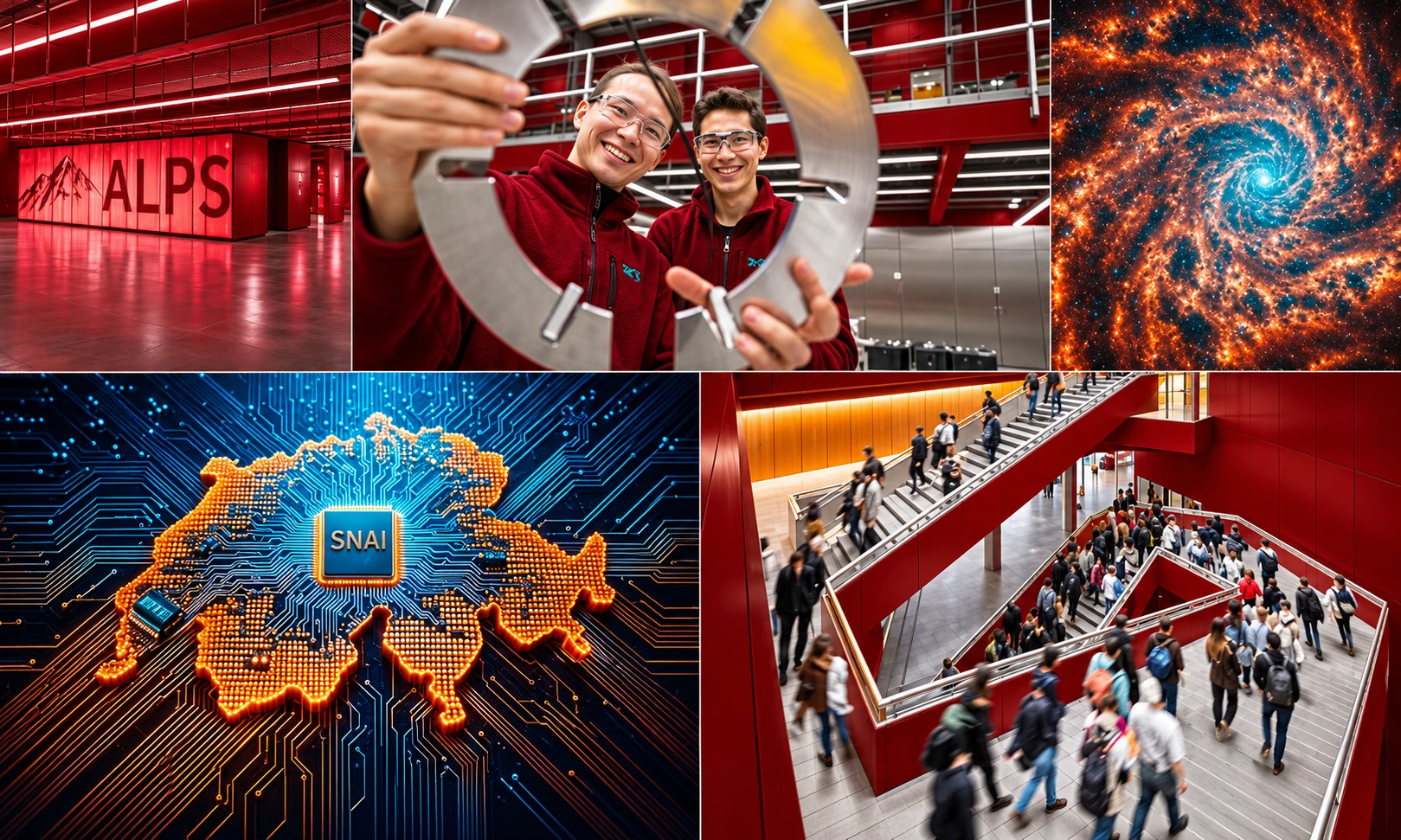
The ecosystem is engineered, not accidental: the Swiss AI Initiative coordinates more than 800 researchers across EPFL and ETH Zurich with 20 million GPU hours annually, and it produced Apertus, an open multilingual model supporting more than 1,000 languages.
AI job postings hit 1.59% of all listings, ahead of every neighbor. Switzerland wins the talent war the way it wins everything: quietly, per capita, and with infrastructure nobody else bothered to build.
2. Singapore: the complete package
Singapore is the only country near the top of every talent metric simultaneously. Second in researcher density (109.5 per 100,000), second in LinkedIn talent concentration (1.82%), second in population adoption (60.9%), and first in hiring intensity, with 4.7% of all job postings mentioning AI skills.
The government treats this as industrial strategy: a National AI Council launched in February 2026, more than 70 companies run AI Centers of Excellence in the city-state, and university AI programs post the world’s highest average subject score at 90.5 out of 100. No country converts talent policy into talent reality faster.
3. Israel: the concentration king
Measured by Stanford’s LinkedIn-based metric, Israel leads the world with 2.10% of members working in AI, the densest professional concentration anywhere.
The pipeline is structural: military technology units feeding startups, a venture ecosystem that produced $18.5 billion in cumulative AI investment, and 64 newly funded AI companies in 2025 alone. For recruiters, Israel is the highest hit-rate market on Earth for senior AI specialists.
The constraint is arithmetic: the pool is dense but small, and everyone in global tech is fishing it.
The importers: buying the talent they cannot grow
4. UAE: the fastest talent build in history
The UAE grew its AI talent concentration 121% between 2019 and 2025, the fastest rate in the world, and did it almost entirely through imports: BCG counts nearly 194,000 highly skilled workers attracted, adding 0.8 points of global market share in a single cycle.
The machinery is deliberate. A ten-year Golden Visa category specifically for AI specialists, the world’s first Minister of AI appointed back in 2017, MBZUAI hiring faculty from China, the US, and Europe, and tax-free compensation that makes relocation math easy.
The UAE also leads the planet in population AI adoption at 64.0%. Critics note imported talent can leave as fast as it arrived. The retention numbers from its neighbor suggest the Gulf has thought of that too.
5. Saudi Arabia: the retention machine
Saudi Arabia recorded the highest talent retention ratio of any major destination at 2.6x, per BCG, meaning it keeps 2.6 people for every one it loses.
The strategy pairs visa policy with raw compute: HUMAIN, backed by the Public Investment Fund, plans to deploy up to 600,000 NVIDIA units across new data centers, and Stanford’s data shows Saudi Arabia leading the world in AI talent specialized in security, privacy, and cryptography at 15% of its pool. The Gulf bet is that talent follows compute. So far, the net flow data says it does.
The scale engines: the demographic giants
6. India: the talent factory at full throttle
India’s rise is the volume story of the decade: talent concentration up 120% since 2019, a jump from #7 to #3 in Stanford’s global vibrancy ranking, and the world’s second-largest pool of AI authors and inventors. The IndiaAI Mission backs it with more than 45,000 shared GPUs and support for homegrown foundation models.
Two honest footnotes matter. Stanford records India with the world’s largest net talent outflow at -16.9 in 2025, because its best people still leave in huge numbers, and BCG notes that much of India’s inbound talent is returning diaspora rather than new foreign attraction. India is simultaneously the world’s greatest AI talent producer and its greatest exporter. Both facts are the opportunity.
7. China: the retention turnaround

The deepest shift in the global talent map is not visible in migration statistics because it is defined by people who stopped moving. China’s research machine now leads the world in publication volume, citations, and patent output, its top models trail the American frontier by just 2.7% as of March 2026, and its domestic salary war has turned aggressive:
DeepSeek and its rivals push fresh-graduate packages toward 1.5 million yuan, roughly $210,000, with top researchers offered far more. Beijing, Shenzhen, and Shanghai concentrate more than 70% of national AI investment, with DeepSeek’s hometown Hangzhou rising fastest.
The talent that once flowed automatically toward the US increasingly stays, and the US inflow collapse is partly the mirror image of that decision.
The specialists: winning one dimension completely
8. South Korea: patents per capita
South Korea leads the world in AI patents per capita, and its talent pool skews exactly where its economy points: 20% of Korean AI specialists work in hardware, VLSI, and IoT, the highest share anywhere, consistent with its position in the semiconductor supply chain.
As AI’s center of gravity tilts from models toward the physical infrastructure running them, Korea’s talent mix looks less like a quirk and more like a head start.
9. Spain: Europe’s quiet adopter
Spain is the entry most rankings miss: 41.8% population AI adoption, sixth in the world and far ahead of the US at 28.3%, talent concentration up 77% since 2019, and 3.3% of job postings mentioning AI, fourth globally.
The state is building the layer underneath with €1.5 billion in public investment, industrial access to the MareNostrum 5 supercomputer, and ALIA, a public family of multilingual models. Spain wins by treating AI as public infrastructure rather than venture theater.
10. Japan: industrial deployment at national scale
Japan’s AI story has never been about startups, and 2026 proved the model works differently: the Second AI Basic Plan, issued in July, includes deploying AI tools to 180,000 government employees, one of the most concrete public-sector adoption commitments any country has made.
The private depth is industrial: Sakana AI, Preferred Networks, and NTT’s tsuzumi models embedded in manufacturing and enterprise R&D. Japan wins the dimension no one tracks: deployment into the real economy.
11. Germany: the engineering anchor
Germany holds Europe’s deepest AI talent pool at 1.15% LinkedIn concentration, third among major economies, with $17.2 billion in cumulative private AI investment.
Its challenge is flow: Stanford records a slightly negative net talent movement, and its hiring intensity (1.13% of postings) trails its research strength. Germany has the people. Its open question is whether its companies will hire them into AI roles fast enough to keep them.
The startup hubs: where companies form
12. United Kingdom: Europe’s company factory
The UK’s 172 newly funded AI companies in 2025 rank second globally, behind only the US, and its $34.1 billion in cumulative private AI investment leads Europe by a wide margin.
London remains the default landing spot for frontier labs expanding abroad, and the Global Talent Visa, which assesses achievement rather than pedigree, is among the most rational skilled-migration policies anywhere. The UK wins the talent war’s most practical dimension: turning talented people into funded companies.
13. Hong Kong: the intensity outlier
Hong Kong posts the world’s second-highest AI hiring intensity at 3.5% of all job postings, behind only Singapore, and BCG records it among the strongest gainers in talent inflows. Positioned between China’s research machine and global capital markets, it is reclaiming its historical role as the interface between the two, this time for AI talent and the money following it.
The cautionary case: what losing looks like
14. Canada: the pioneer that stalled
Canada deserves its place on this list as the warning it has become. The country that helped shape modern deep learning, home to Hinton, Bengio, and the research diaspora that built OpenAI and Google Brain, saw its net AI talent flow decline to -7.1 by 2025, per Stanford, after running strongly positive around 2020.
The pipeline still produces exceptional researchers, and they still leave, mostly south. Canada proves the uncomfortable rule of the talent war: producing talent and keeping it are different games, and only one of them shows up in your economy. The shift also raises questions about which companies are attracting and retaining the world’s best AI researchers, as explored in this AI company ranking.
Where the US actually stands
The American position is stranger than either boosters or doomers admit. The US holds the world’s largest AI workforce by far, the deepest capital markets, and the strongest net talent inflow of any country, still positive at 26.0 in Stanford’s 2025 measure.
But every trend line points the wrong way: inflow down 89% from 2017 and accelerating, adoption at 24th of 30 economies, and visa policy that BCG documents as a growing headwind, including moves to revoke visas for Chinese students in critical fields. The US is winning the talent war on inventory and losing it on trajectory. Inventory is what you have. Trajectory is what you become.
For companies, the actionable map is the one recruiters already use: frontier research talent concentrates in the US, UK, Canada, France, and China and costs what it costs. Applied engineering at scale comes from India and Eastern Europe. Senior specialist hiring has the highest hit rates in the density champions: Israel, Singapore, Switzerland.
And the Gulf is where deep pockets now outbid you for the people you assumed would take your offer. The talent war’s old rule was “everyone wants to move to San Francisco.” The 2026 AI Index retired it. The new rule is that talent lives everywhere, flows toward compute and policy that welcomes it, and remembers which countries made it feel at home.
Frequently asked questions
Which country has the most AI talent?
By absolute numbers, the United States holds the largest AI workforce, followed by India and China. By density, Switzerland leads with 110.5 AI researchers per 100,000 people. By concentration among professionals, Israel leads at 2.10% of LinkedIn members working in AI, per Stanford’s 2026 AI Index.
Is the US losing the AI talent war?
On trajectory, yes; on inventory, no. The US still attracts more AI talent than it loses, but the inflow of AI researchers has dropped 89% since 2017, with an 80% decline in the last year alone, and US population adoption ranks 24th of 30 economies. It remains the top destination while the trend lines move against it.
Which country is growing AI talent fastest?
The UAE, with 121% growth in AI talent concentration from 2019 to 2025, followed by India at 120%. The UAE achieves this primarily through aggressive skilled immigration, including a ten-year Golden Visa for AI specialists, attracting nearly 194,000 highly skilled workers in a single cycle.
Why is China keeping more AI talent?
Rising domestic salaries (top fresh graduates earn toward $210,000), world-leading research output, concentrated investment in Beijing, Shenzhen, Shanghai, and Hangzhou, and a narrowing 2.7% gap with US frontier models mean the opportunity cost of leaving has collapsed. The flow of Chinese researchers to the US has slowed accordingly.
Where should companies hire AI talent in 2027?
Match the geography to the role. Frontier research: US, UK, Canada, France, China. Applied engineering at scale: India, Eastern Europe, Latin America. Senior specialists with the highest hit rates: Israel, Singapore, Switzerland. The UAE and Saudi Arabia now outbid most markets for senior imports, and Spain offers Europe’s strongest adoption culture.