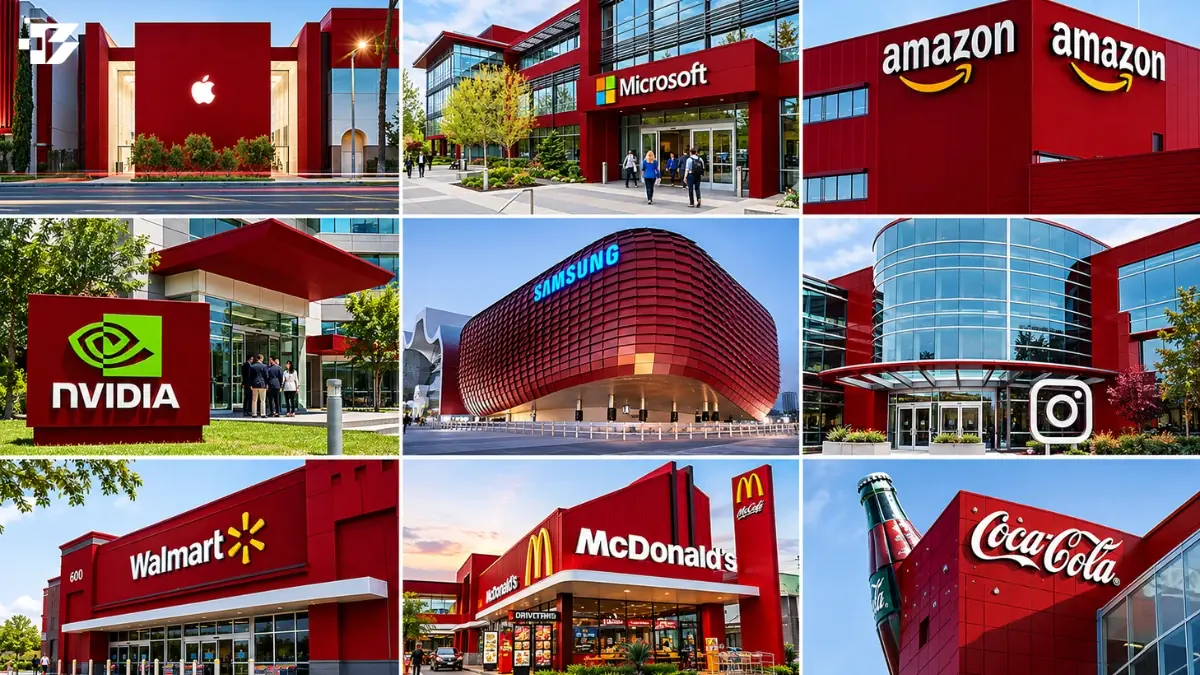
The world’s 100 most valuable brands are now worth a combined $13.1 trillion — up 22% in a single year — and one force explains almost all of it: artificial intelligence. In 2026, Google dethroned Apple in the Kantar BrandZ global ranking for the first time in four years, NVIDIA posted the fastest brand-value growth ever recorded by a top-10 brand, and ChatGPT became the youngest brand in history to crack the global elite. Meanwhile, Tesla lost more than a third of its brand value, proving that in the AI era, even the most famous names get no grace period.
This is the BrandClickX ranking of the 50 most valuable brands heading into 2027 — the names that own consumer trust, pricing power, and increasingly, the intelligence layer underneath them.
Methodology. This composite ranking blends the two authoritative global brand valuation studies published in 2026 — Kantar BrandZ Most Valuable Global Brands (May 2026; consumer-perception-weighted) and Interbrand Best Global Brands (October 2026; financial-performance-weighted) — with BrandClickX editorial scoring for growth momentum and AI-era positioning. Brand value measures what the brand itself is worth, not company market cap. Rankings are re-scored when new studies are published.
The Top 10: Where Trillion-Dollar Brands Live
1. Google — The New #1
Brand value: ~$1.48 trillion (BrandZ) | +23% (Interbrand)
Google ends Apple’s four-year reign on the strength of one narrative: it convincingly answered the AI question. Gemini’s integration into Search, Workspace, and Android turned an existential threat into a growth story, and a $175–185 billion capex program — detailed in our Top 25 AI Companies ranking — signals Google intends to keep the crown. The world’s default answer engine now has the world’s most valuable brand to match.
2. Apple — The $1.38 Trillion Standard
Brand value: ~$1.38 trillion (BrandZ); $514.6 billion (Interbrand) | +9.3%
Apple slipped to second in BrandZ but remains #1 in Interbrand’s financial-performance model — a split decision that captures Apple’s moment perfectly. The brand is as strong as ever; the AI story is still pending. With two decades of premium pricing power and the most loyal customer base in business, Apple doesn’t need to win the AI race. It needs to not lose it. So far, it isn’t losing.
3. Microsoft — The Enterprise Compounder
Brand value: ~$1.11 trillion (BrandZ); $443.7 billion (Interbrand) | +14.2%
Two consecutive years of double-digit brand growth — remarkable for a 50-year-old company. Microsoft’s Copilot strategy embedded AI into the daily workflow of a billion knowledge workers, making it the enterprise counterpart to Google’s consumer win. Its stake in OpenAI (ranked #7 on our AI companies list) doesn’t hurt either.
4. Amazon — The Everything Brand
Brand value: ~$1.02 trillion (BrandZ); $351.8 billion (Interbrand) | +10%
Four trillion-dollar brands exist in the world. All four are technology platforms. Amazon’s brand spans retail, cloud, logistics, entertainment, and now AI infrastructure through AWS — a breadth no competitor can replicate. Retail’s post-pandemic brand-value surge (+48% across the category) kept compounding through 2026.
5. NVIDIA — The Fastest Riser in Brand History
Brand value: ~$814.9 billion (BrandZ); $74.0 billion (Interbrand) | +71.5%
No top-10 brand has ever grown this fast. NVIDIA’s 71.5% Interbrand jump — on top of BrandZ’s trillion-adjacent valuation — reflects its transformation from component maker to the single most important company in the AI supply chain. It’s #1 on our Top 25 AI Companies list, and its brand is now worth more than Coca-Cola, Toyota, and McDonald’s combined. The caution: this brand’s value is concentrated in B2B buyers making enormous bets. Those bets must keep paying.
6. Samsung — The Steady Giant
Brand value: $105.2 billion (Interbrand) | +16.2%
Samsung’s 16% gain makes it the strongest performer among legacy consumer electronics brands — driven by foldables, foundry relevance, and aggressive AI features across its Galaxy line. It remains the bridge between the AI infrastructure story and the devices in two billion pockets.
7. Instagram — The Social App That Out-Branded Coca-Cola
Brand value: $65.5 billion (Interbrand) | +14.4%
A photo-sharing app is now worth more, as a standalone brand, than the most famous soft drink in human history. Interbrand values Instagram independently from Facebook, and its two straight years of double-digit growth reflect something real: for under-35 consumers globally, Instagram is the brand landscape — the place where every other brand on this list competes for attention.
8. Walmart — Retail’s Trillion-Dollar Quiet Compounder
Brand value: BrandZ retail category leader
Walmart’s brand rides the retail surge: omnichannel execution, a marketplace business scaling fast, and a reputation that shifted from “cheap” to “smart” among younger shoppers. In BrandZ’s retail category — up 48% in value — Walmart remains the anchor tenant of American consumption.
9. McDonald’s — The Most Valuable Restaurant Brand Ever
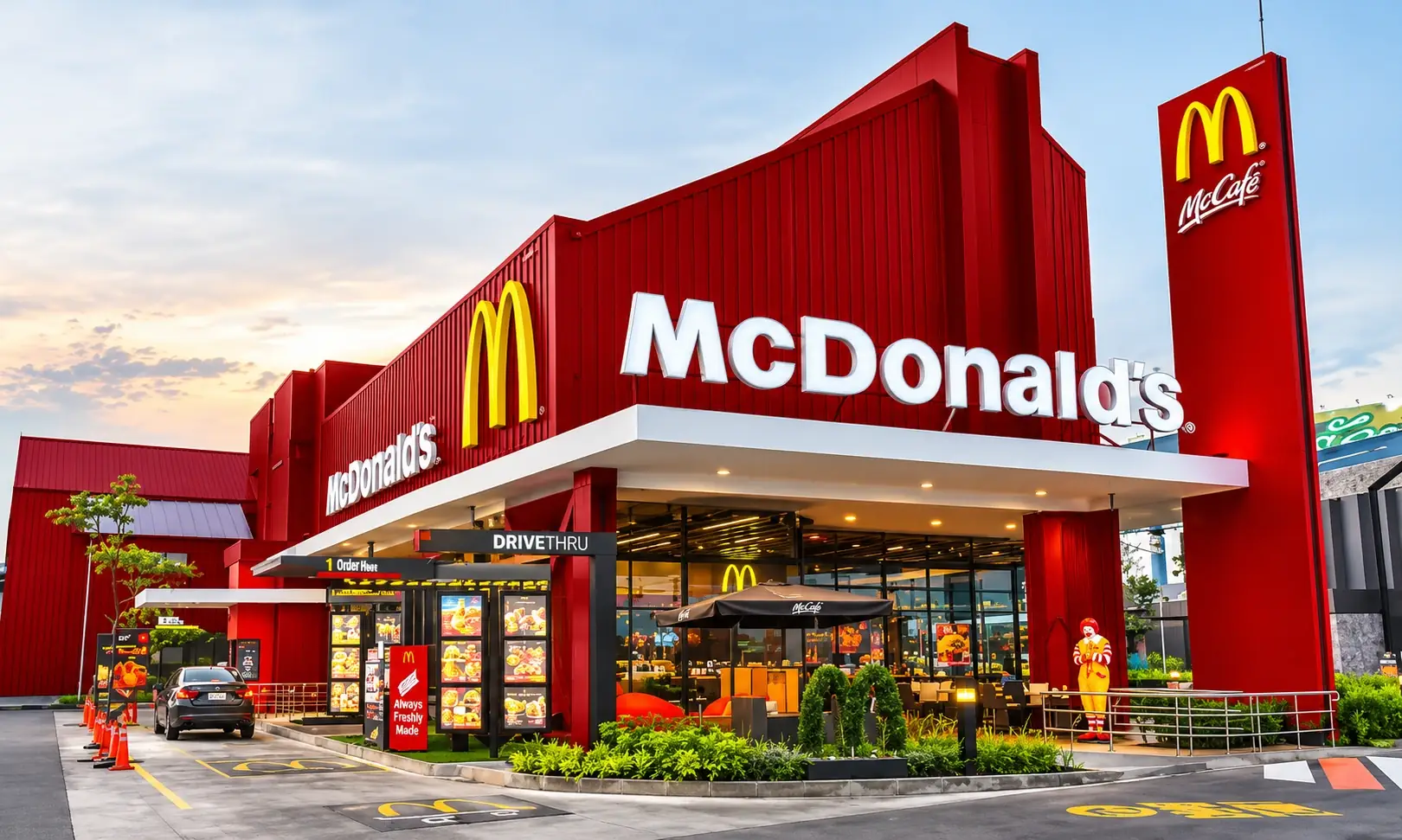
Brand value: $55.5 billion (Interbrand) | +4.6%
McDonald’s brand operates on a different physics than the rest of this list: 40,000 locations, near-universal recognition, and a real estate empire underneath. Modest growth, zero drama, permanent residence in the top 10. In volatile times, boring is a strategy.
10. Coca-Cola — The 138-Year-Old Holdout
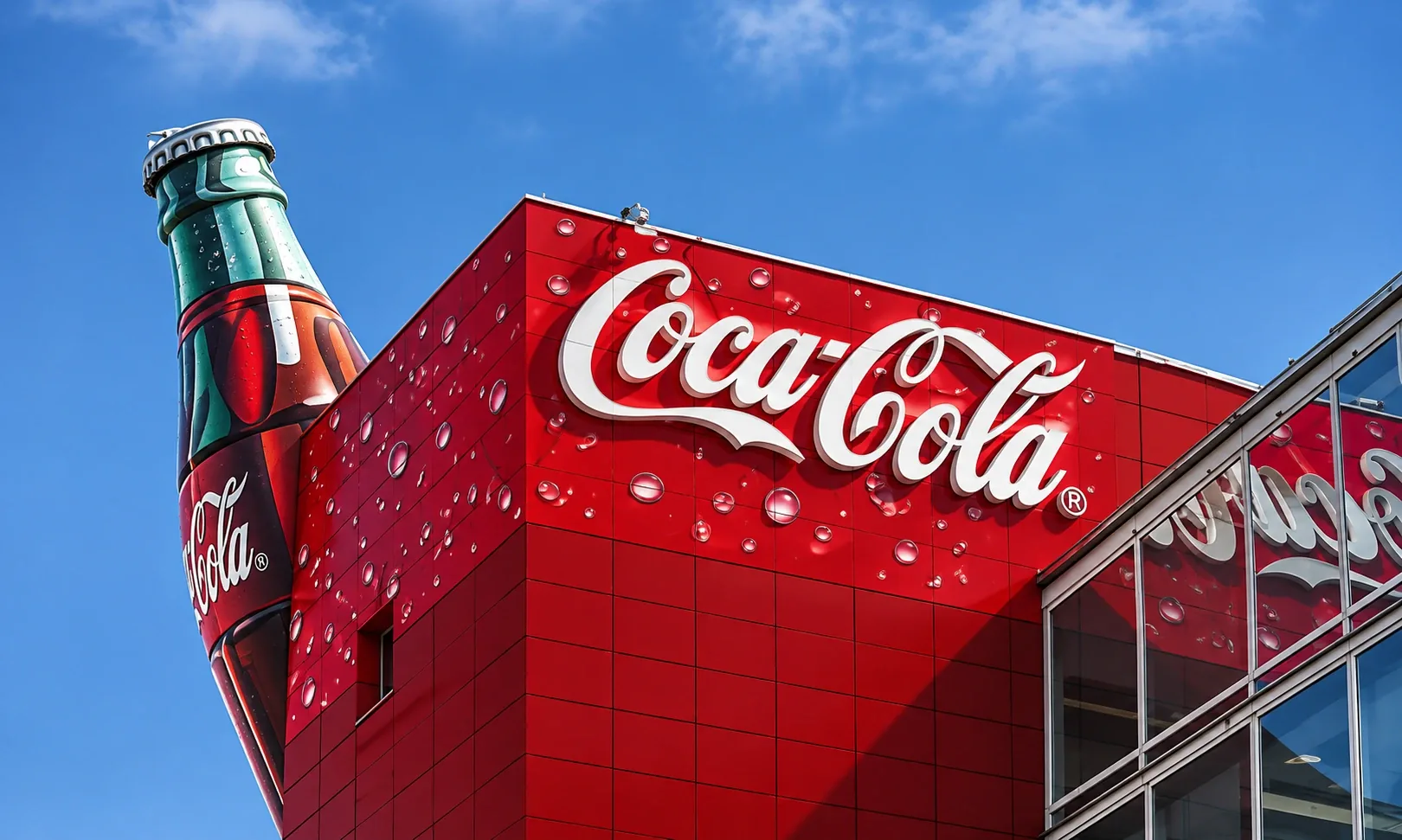
Brand value: $60.3 billion (Interbrand) | +0.4%
Coca-Cola’s brand value flatlined even as net sales grew 7% — the clearest illustration of Interbrand CEO Gonzalo Brujó’s warning that “a famous name is no longer enough.” The business executes; the brand idles. Still, generational recognition and global distribution keep it comfortably inside the top 10 — for now.
The Full Ranking: 11–50
| Rank | Brand | Category | BrandClickX Note |
| 11 | Tencent | Media/Tech | China’s #1 brand at $209.9B (BrandZ), sixth straight year on top |
| 12 | YouTube | Media | +21.7%; paid creators $100B+ since 2021, now navigating the AI-content flood |
| 13 | Visa | Finance | Payments duopoly member; brand = trust infrastructure for global commerce |
| 14 | Social | +9.8%; the elder statesman of social, still growing | |
| 15 | Toyota | Automotive | Top auto brand despite a -19.9% year; reliability equity runs deep |
| 16 | Louis Vuitton | Luxury | Flagship of LVMH; -6.9% as luxury bifurcates — see our luxury brands list |
| 17 | Hermès | Luxury | +10.6%; scarcity discipline beats scale in the new luxury economy |
| 18 | Mastercard | Finance | Visa’s mirror; pushing into AI-powered fraud and B2B payments |
| 19 | Oracle | Tech | +8%; the database giant reinvented as AI cloud infrastructure |
| 20 | Alibaba | Retail/Tech | +33% brand rebound as China’s cloud + AI bet lands |
| 21 | Cisco | Tech | +17%; networking’s quiet winner in the data center buildout |
| 22 | SAP | Tech | Enterprise software’s European champion riding the AI upgrade cycle |
| 23 | Moutai | Spirits | $82B; the world’s most valuable alcohol brand, anchored in Chinese gifting culture |
| 24 | Disney | Entertainment | Streaming profitability restored the magic; parks print cash |
| 25 | Netflix | Entertainment | Won the streaming wars; now monetizing ads and games |
| 26 | Nike | Apparel | A brand in repair mode — still the most valuable name in sportswear |
| 27 | IBM | Tech | The oldest brand in tech’s top tier, reborn on hybrid cloud and AI consulting |
| 28 | Douyin | Media | $98.4B and +29%; ByteDance’s domestic engine is a brand superpower |
| 29 | Mercedes-Benz | Automotive | Holding premium ground while the category contracts |
| 30 | BMW | Automotive | Same storm as Mercedes, slightly better umbrella |
| 31 | Chanel | Luxury | Grew while peers shrank; independence as brand strategy |
| 32 | J.P. Morgan | Finance | The most valuable banking brand on Earth |
| 33 | Salesforce | Tech | Betting the brand on agentic AI — Agentforce is the test |
| 34 | Adobe | Tech | Firefly made it the creative industry’s AI incumbent |
| 35 | Huawei | Tech | +25%; sanctions-era resilience turned into a nationalist brand asset |
| 36 | Accenture | Services | The brand enterprises call when AI strategy gets real |
| 37 | Pepsi | Beverages | Value-stable challenger riding snacks more than soda |
| 38 | Tesla | Automotive | The cautionary tale: -38% brand value, down 25 places. Fame without trust repriced fast |
| 39 | Zara | Retail | Inditex’s speed machine still sets fast fashion’s tempo |
| 40 | Sony | Electronics | PlayStation + image sensors + entertainment = quiet diversification win |
| 41 | L’Oréal Paris | Beauty | Beauty’s most valuable brand, scaling AI skin diagnostics |
| 42 | IKEA | Retail | The flat-pack fortress; sustainability messaging that actually lands |
| 43 | adidas | Apparel | Gained while Nike stumbled; terrace culture did the work |
| 44 | Airbnb | Travel | Redefined a category so completely the brand became a verb |
| 45 | Ferrari | Automotive | The ultimate scarcity brand — margins luxury houses envy |
| 46 | Spotify | Media | Re-entered the global elite; the default soundtrack of the internet |
| 47 | LEGO | Toys | The most valuable toy brand ever; adults now drive growth |
| 48 | Uniqlo | Retail | 2026’s top retail riser (+16%); basics, perfected |
| 49 | Stripe | Fintech | New to the global elite; the brand developers trust with money movement |
| 50 | ChatGPT | AI | The fastest brand ascent ever recorded — from launch to global top tier in under four years. Also #7’s parent on our AI companies ranking |
What the 2027 Ranking Tells Us
- The AI premium is real and measurable. Every top-5 brand has a direct AI revenue story. NVIDIA added more brand value in one year than most brands accumulate in a century. Meanwhile, AI-native brands — ChatGPT, and in China, Kimi, Doubao, and ChatGLM — are entering elite rankings within years of launch, something no consumer brand in history had done.
- Automotive is repricing. Toyota fell ~20%. Tesla collapsed 38% and dropped 25 places. Mercedes and BMW held flat at best. The category’s problem isn’t electrification anymore — it’s that innovation no longer translates into brand differentiation when every car has the same screens and the same assistant.
- Luxury split in two. Hermès (+10.6%) and Chanel grew while Louis Vuitton (-6.9%) declined. Heritage alone stopped working; heritage plus scarcity discipline and cultural relevance is the surviving formula. We track this split in depth in our Top 25 Luxury Brands ranking.
- Fame is no longer a moat. Interbrand’s central 2026 finding — echoed across this ranking — is that brand value now follows business momentum, not recognition. Coca-Cola is the world’s most famous brand and had its flattest year. Instagram, a decade and a half old, blew past it.
Frequently Asked Questions
What is the most valuable brand in the world in 2027?
Google holds the top position in the Kantar BrandZ 2026 ranking at approximately $1.48 trillion, while Apple leads Interbrand’s financial-performance model at $514.6 billion. The two studies measure brand value differently, which is why BrandClickX publishes a composite ranking.
What’s the difference between brand value and market cap?
Market cap is what the whole company is worth on the stock market. Brand value isolates the worth of the brand itself — the premium customers pay and the demand the name alone generates.
Which brand grew fastest in 2026?
NVIDIA, with a 71.5% jump in Interbrand’s ranking — the fastest growth ever recorded by a top-10 global brand — driven by its central role in the AI buildout.
Which brand fell hardest?
Tesla, which lost nearly 38% of its brand value and dropped 25 places to #50 in Interbrand’s 2026 ranking.
How often is this ranking updated?
Twice yearly, when Kantar BrandZ (May) and Interbrand (October) publish new editions.