The AI industry crossed a line in 2026 that no technology sector has crossed before: three AI-linked companies are now collectively worth more than every U.S. tech IPO of the last 45 years combined. Anthropic and OpenAI alone have absorbed nearly $300 billion in venture capital, NVIDIA briefly became the most valuable company in human history, and xAI got folded into a $2 trillion SpaceX. The question is no longer whether AI is the biggest business story on Earth — it’s who actually owns the story.
This is the inaugural BrandClickX ranking of the 25 AI companies that matter most heading into 2027: the labs building frontier intelligence, the giants monetizing it, and the startups turning it into products the world can’t stop using.
Methodology. Rankings weigh four factors: (1) market capitalization or latest private valuation, (2) AI-attributable revenue and growth rate, (3) technological frontier position, and (4) distribution and ecosystem influence. Public companies are ranked with the caveat that their market caps reflect entire businesses, not AI alone. Private valuations reflect the most recent confirmed funding round as of November 2026. Sources include company announcements, funding disclosures, and industry research cited at the end of this article. This list is re-scored quarterly.
1. NVIDIA — The Company Selling Shovels in the Biggest Gold Rush Ever
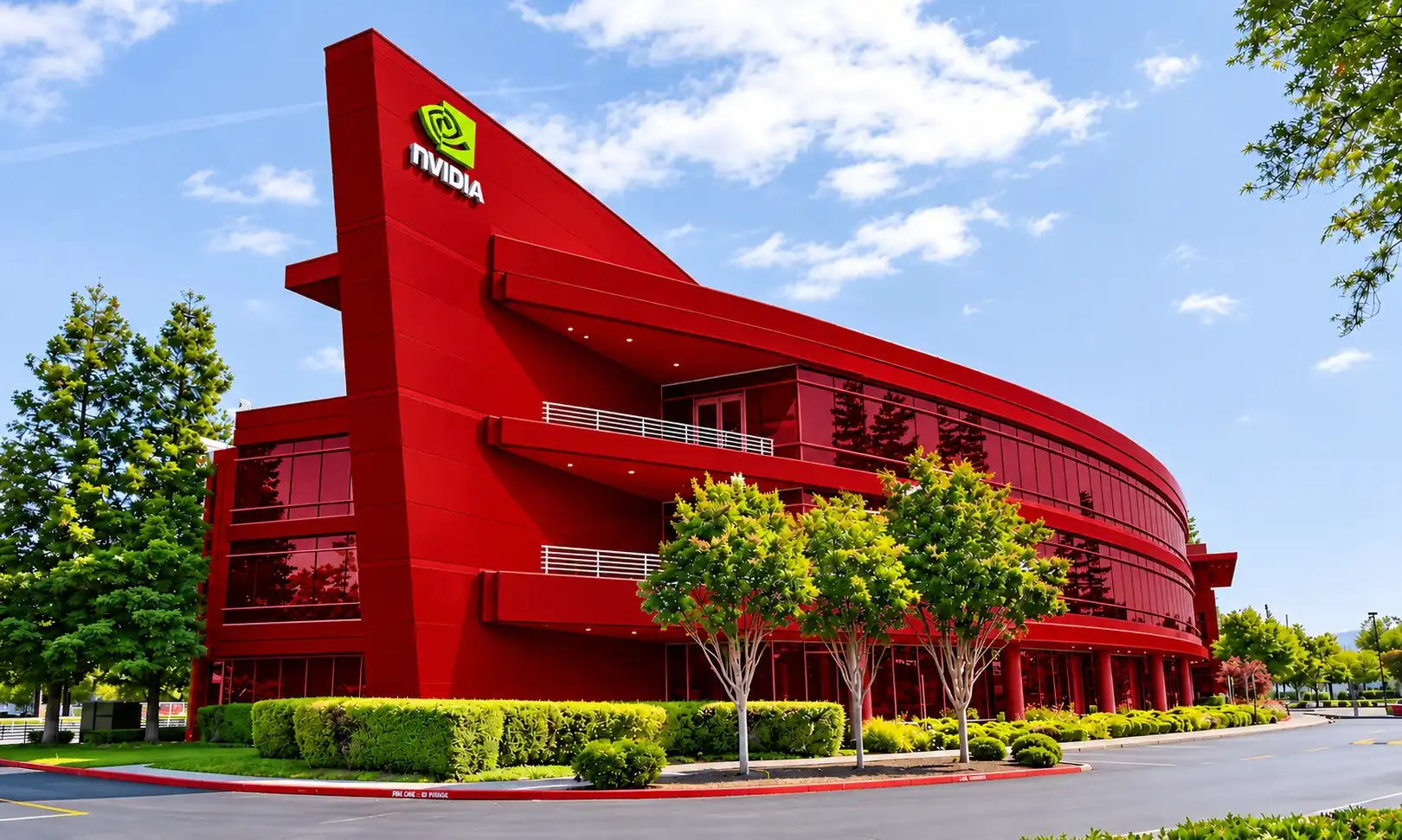
Market cap: ~$5.65 trillion | Santa Clara, USA
Every company on this list either pays NVIDIA or wishes it didn’t have to. The chipmaker’s GPUs train nearly every frontier model in existence, and its CUDA software stack has become the closest thing AI has to an operating system. With data center revenue compounding at rates no hardware company has ever sustained and sovereign AI programs from Riyadh to Seoul writing checks, NVIDIA enters 2027 as the industry’s toll booth — and the benchmark every AI chip startup is trying (and mostly failing) to undercut.
2. Alphabet (Google DeepMind) — The Sleeping Giant That Woke Up
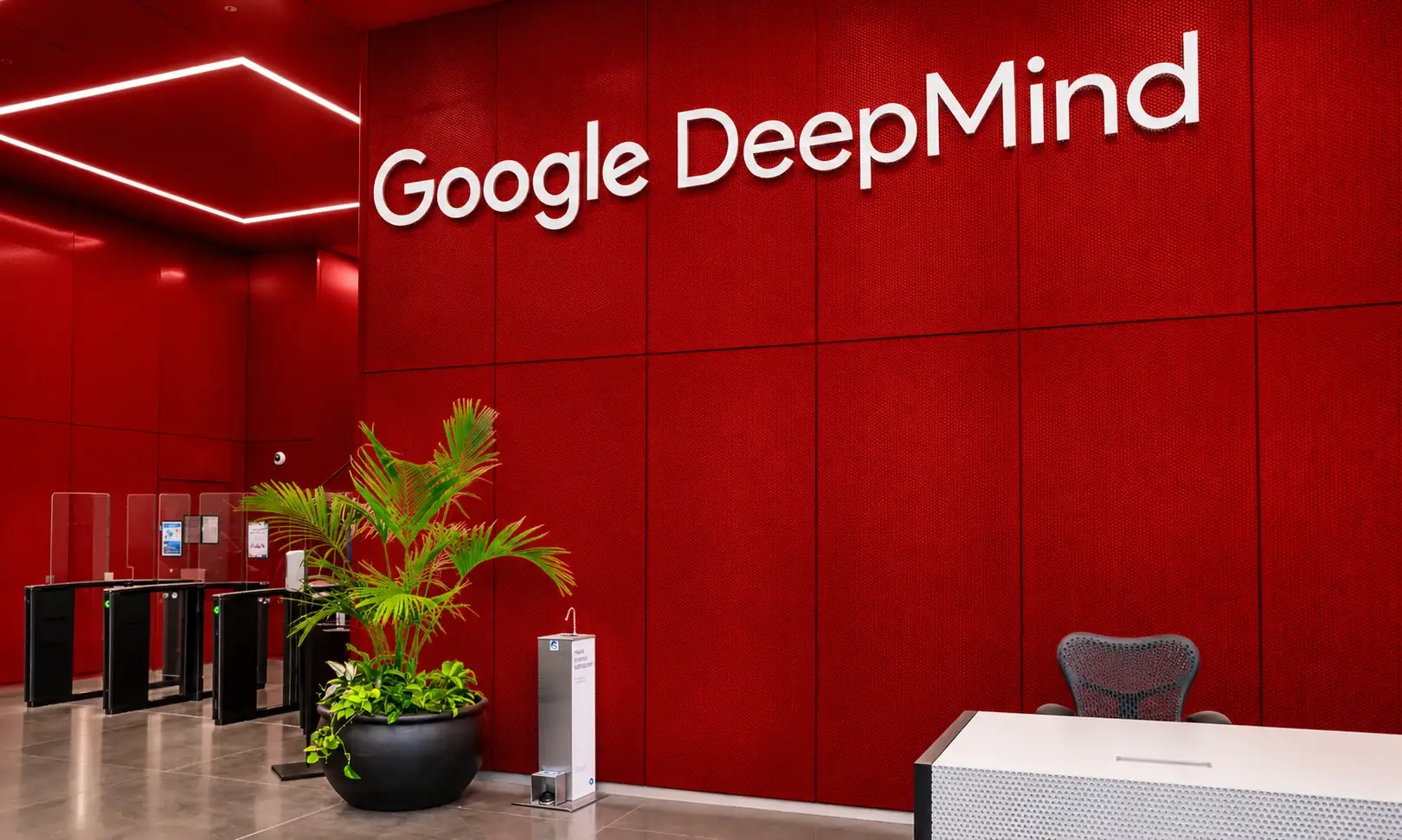
Market cap: ~$4.16 trillion | Mountain View, USA
Google owns the full stack: Gemini models, DeepMind’s research bench, custom TPU silicon, and distribution into Search, YouTube, Android, and Cloud. Its 2026 capex guidance of $175–185 billion — roughly 60% going to AI servers — is the largest infrastructure bet in corporate history. The lingering question is monetization discipline: Alphabet bundles AI into products billions already use, which maximizes reach but blurs the revenue line. In 2027, Gemini’s enterprise traction will decide whether the giant leads or merely participates.
3. Microsoft — The Distribution Machine
Market cap: ~$3.84 trillion | Redmond, USA
Microsoft’s genius was never building the best model — it was owning the desks where AI gets used. Copilot is embedded across Windows, Microsoft 365, and GitHub; Azure hosts the models enterprises actually deploy; and its OpenAI stake remains one of the shrewdest investments ever made. The risk is dependency: as OpenAI eyes independence and Anthropic wins enterprise API share, Microsoft’s 2027 challenge is proving Copilot revenue can stand on its own.
4. SpaceX (xAI) — The $2 Trillion Dark Horse
Market cap: ~$2.1 trillion | Starbase, USA
When xAI merged into SpaceX in February 2026, it created the strangest conglomerate in tech: rockets, satellites, a social platform, and a frontier AI lab under one roof — now publicly traded after June’s record IPO. Grok’s real-time data advantage from X is genuine, and Musk’s Memphis supercluster remains one of the largest single-site compute builds on Earth. Whether AI becomes a real revenue pillar or stays a costly side quest is the defining question for 2027.
5. Meta — The Open-Weight Insurgent
Market cap: ~$1.85 trillion | Menlo Park, USA
Meta’s Llama models made open-weight AI a global standard, and Meta AI reaches more consumers than any assistant not named ChatGPT. The 2025 poaching of Scale AI CEO Alexandr Wang to lead its superintelligence lab signaled Zuckerberg’s seriousness. The bet: give away the models, monetize attention and ads, and own 49% of Scale AI’s data engine while you’re at it. If open weights commoditize frontier AI, Meta holds the detonator.
6. Anthropic — The Enterprise Favorite
Valuation: $965 billion | San Francisco, USA
The most valuable pure-play AI company on Earth. Anthropic’s May 2026 Series H — $65 billion raised at $965 billion — crowned a stunning reversal: it now holds an estimated 40% of enterprise LLM API spending (up from 12% in 2023) and 54% of enterprise coding spend, with a revenue run rate that crossed $47 billion. Claude Code became the tool professional developers actually pay for. With an IPO reportedly targeted for late 2026 or beyond, Anthropic enters 2027 as the company Wall Street is desperate to own.
7. OpenAI — The Brand That Started It All
Valuation: 852billion(reportedlyseeking 852 billion (reportedly seeking ~1.2 trillion) | San Francisco, USA
OpenAI still owns the consumer mind: ChatGPT reaches roughly 60% of U.S. AI users — triple Claude’s reach — and the company reportedly passed $25 billion in annualized revenue back in February. But 2026 was complicated: a paused IPO, a $278 billion projected negative free cash flow through 2030, and an enterprise flank under siege from Anthropic. A rumored new round at $1.2 trillion suggests investors still believe the category king stays the king. 2027 will render the verdict.
8. Amazon (AWS) — The Quiet Arms Dealer
Seattle, USA
AWS doesn’t need to win the model war — it hosts it. Bedrock gives enterprises Claude, Llama, and more through one API, Trainium chips attack NVIDIA’s margins, and Amazon’s multi-billion-dollar Anthropic investment ties it to the fastest-growing lab in the field. AWS captured the largest share of the roughly $20 billion in cloud AI revenue booked in 2025. Never flashy, always invoicing.
9. CoreWeave — The GPU Landlord
Valuation: ~$190 billion | Roseland, USA
The breakout infrastructure story of the AI era. CoreWeave pivoted from crypto mining to become the specialized GPU cloud that frontier labs and enterprises rent by the gigawatt. Its 2026 valuation near $190 billion reflects a simple truth: compute is the scarcest asset in AI, and CoreWeave owns more rentable supply than anyone outside the hyperscalers. Customer concentration is the risk; insatiable demand is the answer.
10. Waymo — Autonomy’s First Trillion-Dollar Candidate
Valuation: ~$126 billion | Mountain View, USA
Waymo’s reported $16 billion raise in early 2026 made it the most valuable physical-AI company in the world. While rivals demo, Waymo operates: fully driverless rides at commercial scale across multiple U.S. cities, with the safety data regulators actually trust. Autonomous driving is AI’s most capital-intensive frontier — and Waymo’s decade-long head start looks increasingly unassailable heading into 2027.
11. DeepSeek — The Efficiency Shock
Valuation: ~$85–95 billion | Hangzhou, China
DeepSeek rewrote the industry’s cost assumptions when its R1 model briefly matched America’s best in early 2025 — trained for a fraction of the budget. By March 2026, the gap between top U.S. and Chinese models had narrowed to under 3% on key benchmarks. DeepSeek’s open, efficient approach makes it the hedge every enterprise wants against American frontier-lab pricing, and the clearest proof that AI’s future won’t be written in one country.
12. Safe Superintelligence — The $50 Billion Research Bet

Valuation: ~$40–60 billion | Palo Alto, USA
Ilya Sutskever’s post-OpenAI venture is the purest conviction play in AI: no products, no revenue pressure, just a single mandate — build safe superintelligence. Eight billion dollars raised on that thesis alone tells you everything about where smart money thinks the ceiling is. SSI is the list’s biggest unknown and, precisely for that reason, one of its most watched names.
13. Cognition — The Autonomous Coder

Valuation: ~$48 billion | San Francisco, USA
Cognition’s Devin made “AI software engineer” a product category instead of a punchline. After absorbing Windsurf’s remaining business in 2026, it consolidated its lead in autonomous coding agents — the segment where AI’s ROI is most measurable. Enterprise coding is the largest departmental AI spend category, and Cognition is charging directly at the $48 billion question: can an agent own the entire dev lifecycle?
14. Moonshot AI — China’s Consumer AI Champion
Valuation: ~$35 billion | Beijing, China
Moonshot’s Kimi assistant made it China’s breakout consumer AI brand, combining frontier long-context models with genuine mass-market adoption. In a market where distribution is everything and export controls reshape compute access, Moonshot has kept pace with better-funded rivals. It anchors China’s AI ecosystem alongside DeepSeek — and 2027 will test whether Chinese labs can convert domestic scale into global revenue.
15. Perplexity — The Answer Engine That Picked a Fight With Google
Valuation: ~$32 billion | San Francisco, USA
Perplexity turned AI search from a feature into a company. Its $2.5 billion June 2026 round valued it at $32 billion on the strength of one proposition: people want answers, not links. With its Comet browser pushing into agentic territory and publishers alternately suing and partnering, Perplexity is the most consequential consumer AI startup not building its own frontier model.
16. Anysphere (Cursor) — The Fastest-Growing Software Company Ever?

Valuation: ~$29.3 billion | San Francisco, USA
Cursor went from launch to an estimated 500M–500M–1B in annual recurring revenue in under three years — a growth curve with no precedent in software history. Its AI-native IDE became the default environment for a generation of developers. The threat is vertical integration from above (Claude Code, Codex); the defense is a product developers genuinely love. Either way, 2027’s most interesting startup duel runs straight through Cursor.
17. Scale AI — The Data Foundry
Valuation: ~$29 billion | San Francisco, USA
Scale labeled the data that trained the industry’s models, then survived its own founder’s departure to Meta’s superintelligence lab — with Meta retaining a 49% stake and Scale claiming revenue growth continued regardless. In an era where frontier labs are starving for high-quality training and evaluation data, Scale remains the pickaxe supplier every model builder still calls.
18. Reflection AI — The Frontier Autonomy Bet

Valuation: ~$26–29 billion | New York, USA
Founded by former DeepMind researchers, Reflection raised aggressively through 2026 on a thesis between lab and product: autonomous AI systems built on frontier research. With $4.6 billion in funding and top-tier talent density, it’s the newest member of the “serious model company” club — and a reminder that in AI, pedigree plus capital still buys a seat at the frontier table.
19. Cohere — The Enterprise Quiet Professional
Valuation: ~$25.5 billion | Toronto, Canada
While louder labs chased consumer fame, Cohere built for the buyer who signs eight-figure contracts: regulated enterprises needing private, deployable, multilingual models. Its North platform and sovereign-AI partnerships with governments and banks give it a defensible niche. In a 2027 market increasingly shaped by data-residency law, Cohere’s boring reliability looks less boring by the quarter.
20. Mistral AI — Europe’s Flag Carrier
Valuation: ~$24.4 billion | Paris, France
Mistral is Europe’s answer to the question of AI sovereignty: frontier-class open-weight models, a growing Le Chat consumer footprint, and a structural tailwind from the EU AI Act, which favors providers with deep compliance DNA. Its Codestral line carved a loyal developer niche. As European enterprises and governments mandate homegrown AI options, Mistral is positioned to be the default choice of a continent.
21. ElevenLabs — The Voice of the AI Internet
Valuation: ~$22 billion | New York, USA / London, UK
ElevenLabs owns a category it essentially created: AI voice that passes for human. Its models power dubbing, audiobooks, customer agents, and creator tools across dozens of languages, with API revenue compounding as voice becomes AI’s next major interface. In a 2027 where agents talk, ElevenLabs is the throat they talk through.
22. Lovable — The Vibe-Coding Phenomenon
Valuation: ~$13.3 billion | Stockholm, Sweden
Lovable’s valuation doubled in eight months of 2026 for one reason: it lets non-developers build real software by describing it. The “vibe coding” wave it spearheaded expanded the software market itself — from millions of developers to hundreds of millions of builders. Europe’s fastest-scaling AI product company, and a template for what consumer AI monetization can look like.
23. Thinking Machines Lab — The Research Royalty Play

Valuation: ~$12 billion | San Francisco, USA
Mira Murati’s post-OpenAI venture assembled one of the densest talent rosters in the industry and raised $2 billion before shipping a broadly available product. Its early work on model customization hints at a thesis: the next margin layer isn’t bigger models, it’s models shaped to each user. Few companies this pre-revenue are this closely watched.
24. Replit — Software Creation for Everyone
Valuation: ~$9 billion | Foster City, USA
Replit tripled its valuation in six months of 2026 (from $3B to $9B) by turning the browser into an AI development environment anyone can use. Its agent builds, deploys, and hosts full applications from natural language — an end-to-end loop competitors are still assembling. For the long tail of founders, students, and operators, Replit is where software now begins.
25. Runway — Hollywood’s AI Studio

Valuation: ~$5–6 billion | New York, USA
Runway’s generative video models went from festival curiosity to production pipeline: studios, agencies, and brands now use its tools in real commercial work. As AI video quality crosses the threshold of indistinguishability for most use cases, Runway stands where the advertising and entertainment money lands first. The creative industry’s AI gateway — and our pick for 2027’s breakout category.
Frequently Asked Questions
What is the most valuable AI company in the world heading into 2027?
Among pure-play AI companies, Anthropic leads at a $965 billion valuation, ahead of OpenAI at $852 billion. Counting public companies, NVIDIA is the world’s most valuable AI-exposed company at roughly $5.65 trillion.
Which AI company makes the most money?
Anthropic reported a revenue run rate exceeding $47 billion in May 2026, the highest disclosed figure among independent AI labs. NVIDIA generates the most AI-attributable revenue overall through data center chip sales.
Why aren’t Apple or Tesla on this list?
Both are significant AI users, but neither monetizes AI as a primary product line at the level of the companies ranked here. Both are tracked in our companion industry lists.
How often is this ranking updated?
Quarterly. Valuations are re-scored after every major funding round, IPO, or acquisition.