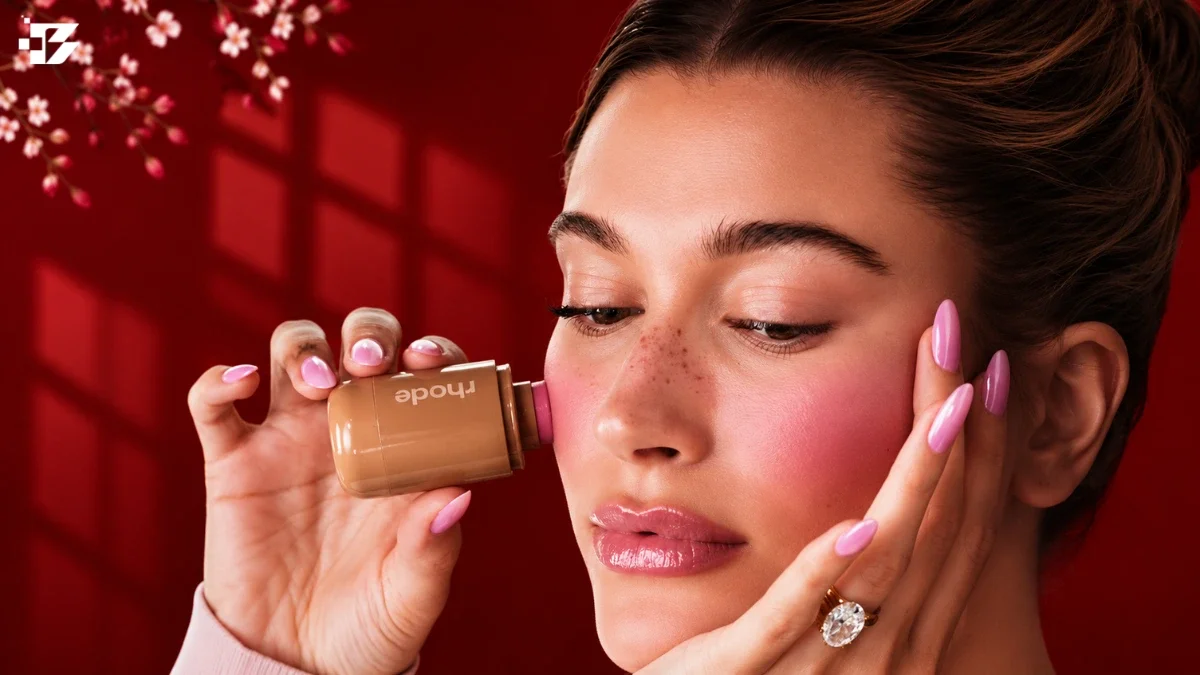
Rhode did $212 million in sales with ten products, no stores and no investors. Then e.l.f. Beauty wrote the biggest check in celebrity beauty history. Here’s how she pulled it off.
Key Facts
- $1 billion: Total potential value of e.l.f. Beauty’s acquisition of Rhode — $600 million cash, $200 million stock, plus a $200 million earnout.
- $212 million: Rhode’s verified net sales in the 12 months ended March 31, 2025, disclosed in e.l.f.’s SEC filing.
- 10: The number of products generating that revenue.
- 3.8x: The revenue multiple e.l.f. paid — a fraction of the 6.8x Coty paid for Kylie Cosmetics on numbers that later proved inflated.
- $300 million+: Bieber’s estimated personal proceeds, against a pre-Rhode net worth of roughly $20 million.
GLAZED DONUT In 2021 Hailey Bieber posted that if she
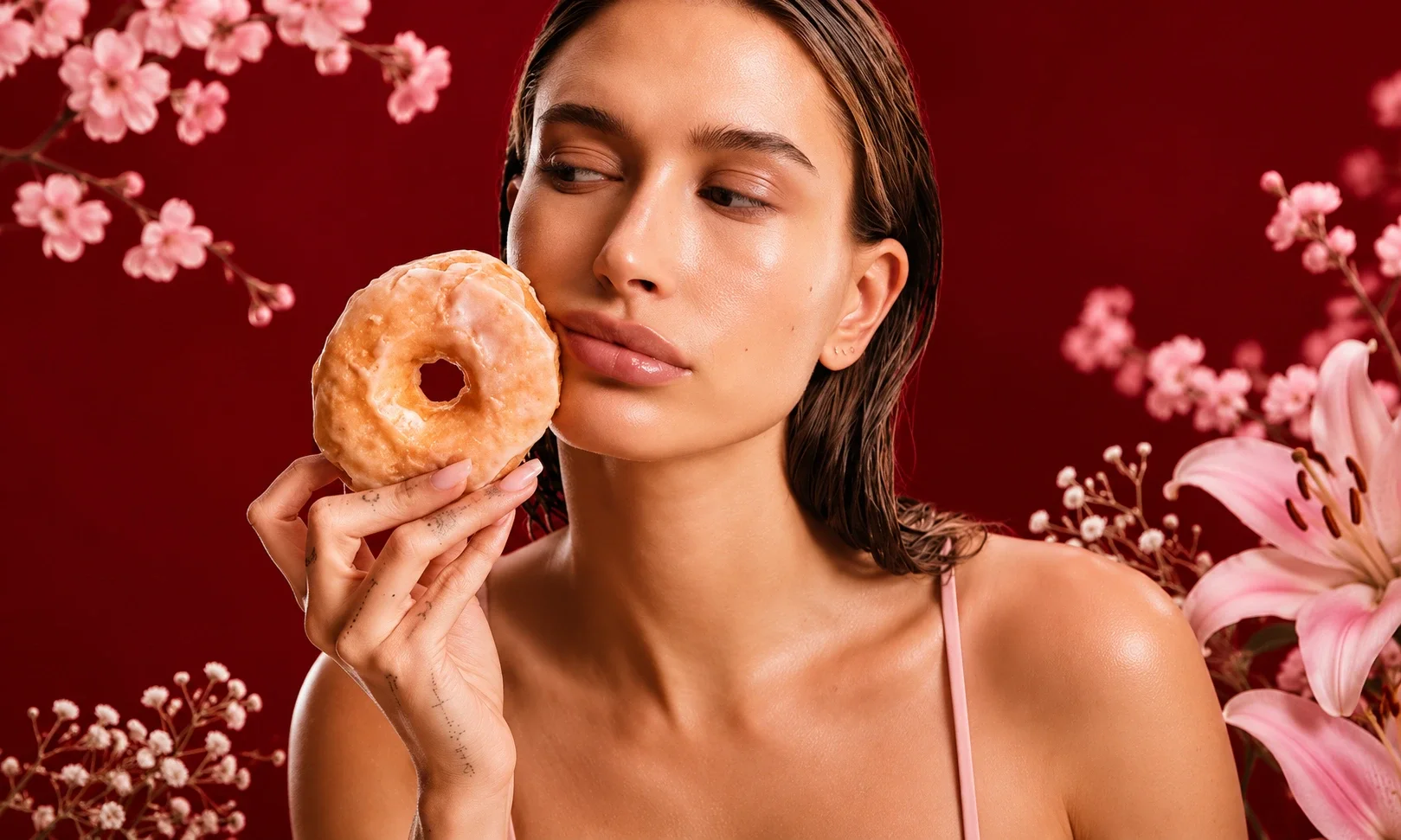
In 2021, Hailey Bieber posted that if she didn’t go to bed looking like a glazed donut, she was doing something wrong. The internet did the rest: billions of TikTok views, a skincare aesthetic named after a pastry, and — though few noticed at the time — a product launch that had already happened in the minds of millions of future customers. Rhode the company didn’t exist yet. Rhode the demand did.
Fourteen months later, in June 2022, Bieber launched three products on a single website. They sold out in three days. The waitlist for one of them — a $16 lip treatment — swelled to 440,000 people.
Three years after that, e.l.f. Beauty agreed to pay up to $1 billion for the company.
It is the fastest celebrity beauty exit on record, and arguably the cleanest. No incubator. No venture capital. No retail partner until the final act. And unlike the last celebrity beauty brand to command a billion-dollar headline, the numbers were verified by the buyer’s securities filings — not inflated by the seller’s publicist.
The Anti-Kylie Playbook
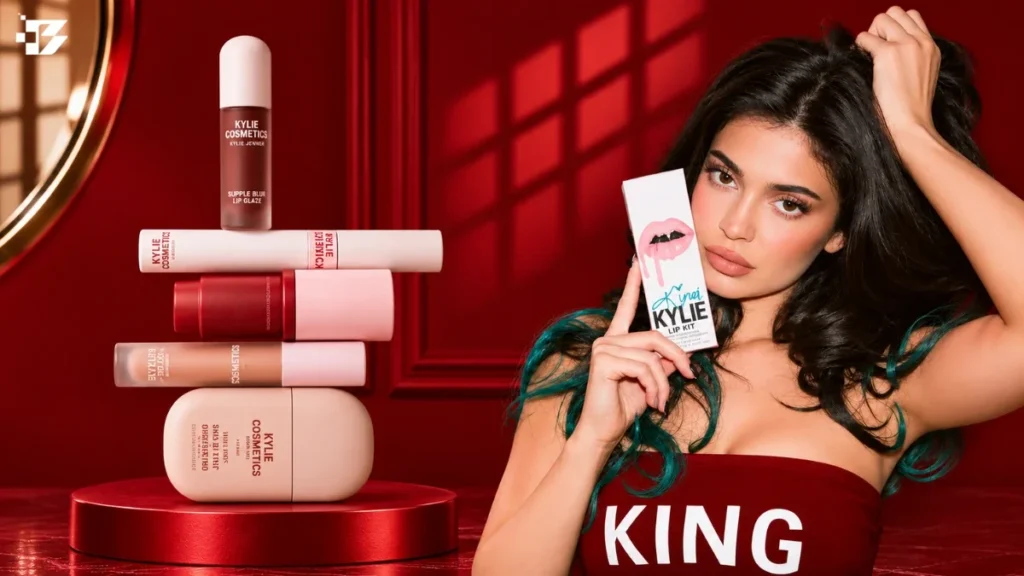
Rhode’s story is impossible to tell without Kylie Cosmetics — the brand that wrote the celebrity beauty playbook in 2015, and the cautionary tale that Rhode read carefully.
Kylie’s model was velocity: flood the market with SKUs, lean on an incubator’s manufacturing, monetize hype before it cooled. It worked — until it didn’t. Coty’s $600 million purchase of 51% of Kylie Cosmetics in 2019 valued the brand at $1.2 billion, but the deal’s SEC filings exposed trailing revenue of $177 million, roughly half what had been claimed. Forbes revoked Jenner’s billionaire title within six months.
Bieber, who watched all of it from the front row of the same industry, made the opposite choice at nearly every decision point.
She declined incubator deals — including overtures from the same ecosystem that built ColourPop and powered Kylie’s early run — specifically to preserve majority ownership. She launched with three products and kept the count near ten for three years. She hired operators, not hype men: co-founders Michael D. Ratner and Lauren Ratner, strategic partner One Luxury Group, and CEO Nick Vlahos, formerly of The Honest Company. Fewer than 40 people ran the company through 2024.
The result was a growth curve that doubled every year — $10 million in its first 11 days of 2022, roughly $50 million in 2023, roughly $100 million in 2024, and $212 million in the twelve months before the acquisition.
Big Number: $21 million. That’s roughly the average annual revenue per Rhode SKU at the time of the sale — a revenue-per-product figure legacy beauty brands with thousand-item catalogues can only dream of.
The $16 Hero Product
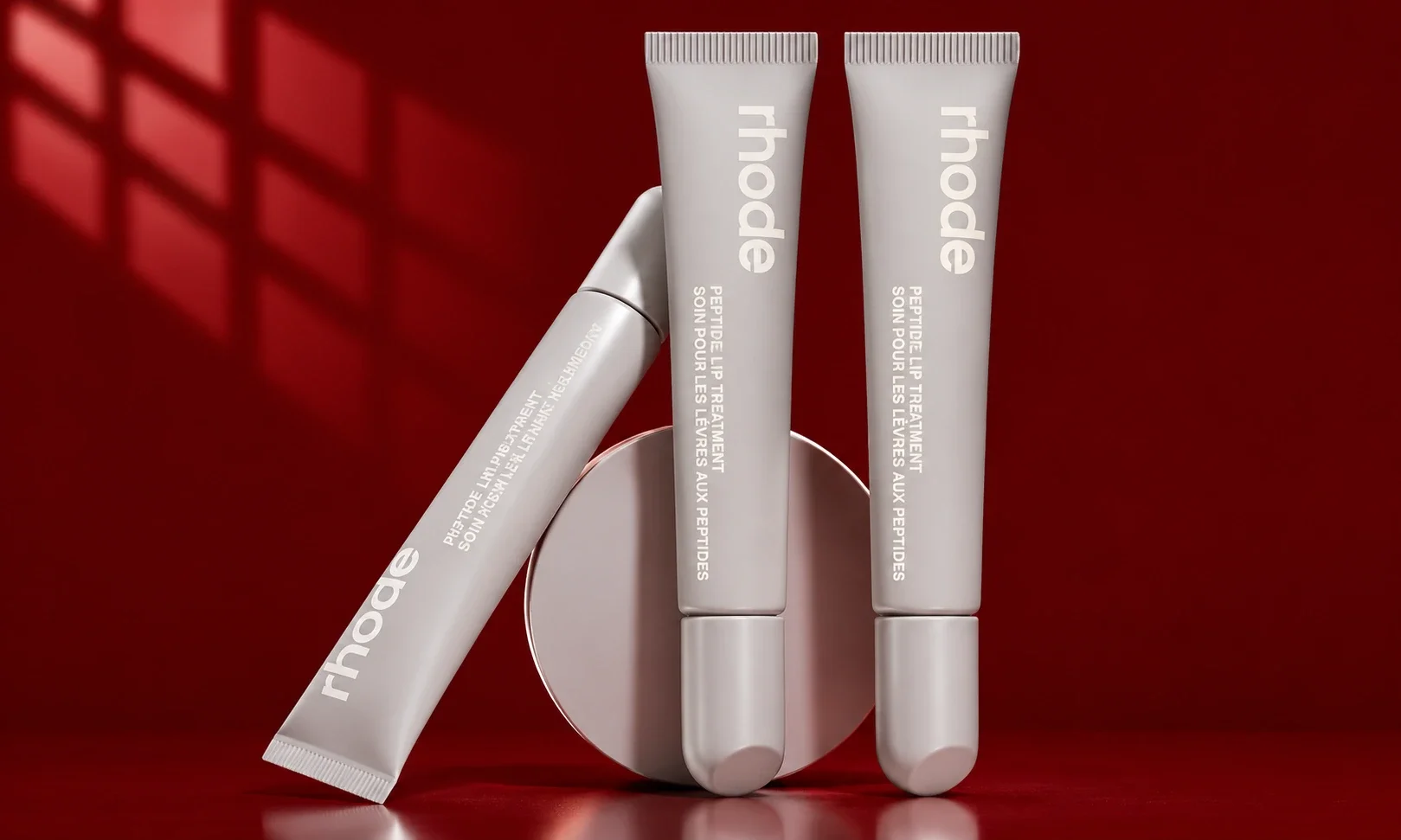
Every breakout beauty brand has a gravitational center. For Rhode, it’s the Peptide Lip Treatment — a $16 tube that sold its millionth unit within 14 months of launch, generating an estimated $16 to $20 million in first-year revenue from a single SKU. We reviewed it in depth here.
Economics explains the obsession. In the direct-to-consumer model Rhode ran exclusively for three years, gross margins on a $16 lip product can reach 70% — and Rhode kept all of it. No wholesale discount, no retailer margin, no distributor. Just a waitlist.
That discipline created an unusual financial profile for a celebrity brand: no debt, no outside equity, and an earned media engine valued at $248 million in 2024 alone — the highest of any skincare brand in the world, up 367% year over year, on essentially zero traditional advertising spend.
The Deal: $800 Million Down, $200 Million To Earn
On May 28, 2025, e.l.f. Beauty — the $6 billion mass-market disruptor that had spent years outmaneuvering L’Oréal and Estée Lauder at the drugstore shelf — announced it would buy Rhode. The deal closed August 5.
Deal Structure
| Component | Amount | Terms |
|---|---|---|
| Cash at closing | $600M | Debt-financed |
| e.l.f. stock | $200M | ~2.6M shares, one-year founder lockup |
| Earnout | Up to $200M | Growth targets through 2028 |
| Total | $1B | 3.8x trailing sales |
The multiple tells you everything about how the beauty M&A market has matured. Coty paid 6.8x sales for Kylie in 2019 — a premium for a story. e.l.f. paid 3.8x for Rhode — a fair price for audited growth, plus an earnout structure that only works when both sides believe the numbers.
Bieber’s take was never disclosed. But with an estimated 50–70% stake — the reward for refusing incubator and VC money — her share of the $800 million closing consideration lands north of $300 million. Her estimated net worth before Rhode was $20 million. The earnout could add up to $200 million more to equity holders through 2028.
Crucially, she didn’t cash out and leave. Bieber remains Founder, Chief Creative Officer and Head of Innovation — and took on an advisory role across e.l.f.’s portfolio.
The Retail Detonation
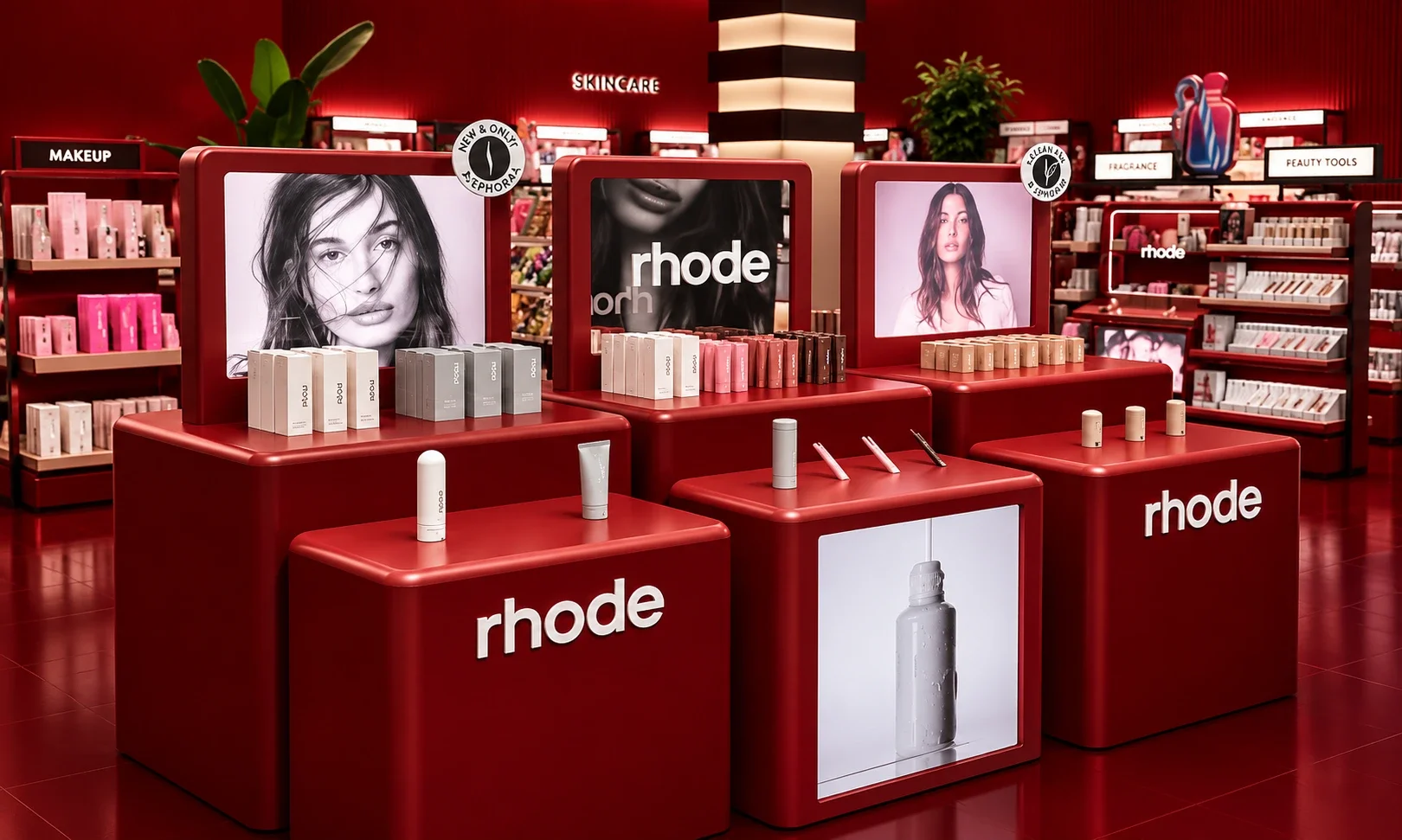
For three years, Rhode refused retail. Then, on September 4, 2025 — five weeks after the acquisition closed — it launched in Sephora North America, and the demand built up over 1,100 days of scarcity arrived all at once.
The numbers from that week read like a misprint. It was the largest brand launch in Sephora North America’s history — 2.5 times the previous record. More than $10 million in retail sales in 48 hours. Roughly three products are sold every second. On launch day, Rhode accounted for over 35% of Sephora North America’s entire online sales and cracked the retailer’s top ten skincare brands within 72 hours. Sephora’s own search data showed two million organic on-site searches for Rhode before a single unit reached a shelf.
Two months later, the UK launch broke Sephora Britain’s record by a factor of five. Mecca brought the brand to Australia and New Zealand in February 2026; Mexico and seven European countries followed by mid-year.
The context that matters: 74% of Rhode’s social following already lived outside the U.S., and international customers were driving 20% of its direct sales before it had a single foreign store. The expansion isn’t creating demand. It’s catching up to it.
What To Watch For
The post-acquisition numbers suggest the earnout was priced conservatively. Rhode contributed roughly $128 million to e.l.f.’s growth in the quarter ended December 2025, prompting e.l.f. to raise full-year guidance. In the quarter ended June 2026, Rhode alone did approximately $160 million in net sales — nearly 75% of its entire pre-acquisition annual total, in three months — including a single day in which a limited-edition drop generated $27 million in direct sales and 90,000 new customers.
Retention is the figure e.l.f. executives keep citing: roughly 70% of Rhode’s direct-to-consumer revenue now comes from returning customers. Hype built the brand. Repeat purchase is what’s keeping it.
The open question is the one that haunts every celebrity acquisition: what happens when the founder’s star power is fully amortized? Coty’s answer with Kylie was a $31 million impairment. e.l.f. is betting that Rhode’s 70% repeat rate means the product — not the face — is the asset now.
The Verdict
Kylie Cosmetics proved an audience could build a billion-dollar beauty brand. Rhode proved discipline could do it faster, cleaner and more profitably: ten products, clean books, pre-built global demand, and a founder who kept her equity until the check cleared.
The next celebrity brand won’t be judged by its hype cycle. It will be judged by whether its numbers look like Rhode’s — and most of them won’t.
More celebrity empire teardowns: Fenty Beauty, Rare Beauty, the biggest celebrity fortunes, and our full celebrity makeup brands ranking.
Frequently Asked Questions About Hailey Bieber’s Rhode Acquisition
How much did e.l.f. Beauty pay to acquire Rhode?
e.l.f. Beauty agreed to acquire Rhode for up to $1 billion in May 2025. The deal included $600 million in cash and approximately $200 million in e.l.f. Beauty stock at closing, plus up to $200 million in performance-based earnout payments over three years. The acquisition officially closed on August 5, 2025.
How much money did Hailey Bieber make from selling Rhode?
Hailey Bieber’s exact personal earnings from the Rhode acquisition have not been publicly disclosed. The transaction provided $800 million in total closing consideration to Rhode’s existing equity holders, split between cash and stock. Her individual proceeds depend on her ownership stake and the distribution of the sale proceeds. The additional $200 million earnout is conditional on future business performance.
How much revenue did Rhode generate before the acquisition?
Rhode generated $212 million in net sales during the 12 months ended March 31, 2025. e.l.f. Beauty disclosed this figure when announcing the acquisition in May 2025. This financial performance established the basis for the approximately 3.8-times trailing net sales valuation at closing.
Why did e.l.f. Beauty want to acquire Rhode?
e.l.f. Beauty acquired Rhode to expand its presence in prestige skincare and reach a younger, digitally engaged beauty audience. Rhode also offered an established direct-to-consumer business, strong brand recognition, and international growth opportunities. The partnership gave e.l.f. access to Sephora’s retail network and opportunities to scale Rhode globally.
Is Rhode available in Sephora stores?
Yes. Rhode launched in Sephora stores and online across the United States and Canada on September 4, 2025, marking its first major retail expansion. The brand subsequently expanded into the United Kingdom and other international markets. In August 2026, e.l.f. announced another European expansion through Sephora.
Does Hailey Bieber still own or manage Rhode after selling it?
Hailey Bieber remains actively involved with Rhode following the acquisition. She retained leadership responsibilities as Founder, Chief Creative Officer, and Head of Innovation, while continuing to contribute to product development and brand strategy. However, Rhode became a wholly owned subsidiary of e.l.f. Cosmetics after the August 2025 acquisition.