A workable DTC fashion launch plan connects a defined customer, a focused first offer and a realistic path from development to sales. DTC sales mean direct-to-consumer sales, where you sell to customers yourself. A tech pack is a specification document that gives a manufacturer the measurements, materials, sizing and construction details needed to make a garment.
Your plan covers validation, product readiness, operations, marketing and measurement. Each part must fit the customer, product and money you have available. A small first offer gives you clearer feedback than an oversized collection, and it is easier to manage when orders begin.
First-time founders often have to make decisions before they know how many people will buy. Treat your first release as a focused test, not proof that every idea will work. Keep the first launch small enough that you can learn from every order.
Key Takeaways
- Define one likely first customer and one unmet need.
- Match your production model to your cash and risk limits.
- Keep the first collection to a few well-tested products.
- Plan for shipping, store setup and customer service.
- Build interest early, then learn from sales and feedback.
Who Is the First Collection For?
A useful first customer is specific enough that you can predict what they value, where they shop and what they will pay. Specificity helps you choose products and a market position instead of designing for everyone.
Start with a group of people you can describe in plain terms. A clear target makes it easier to judge whether your fashion brand has a real reason to exist. Repeated customer requests matter more than a single viral post.
Describe the person most likely to buy
Describe your likely customer’s lifestyle, location, price sensitivity, shopping habits, values and visual taste. A runner in Seattle who wants work-to-trail layers has different needs from a New York shopper seeking office clothes. Note how often they buy clothing, which stores they trust, and whether they value local production or low prices.
Use details that shape a purchase, not broad labels. “Young adults” says little about fit, fabrics or spending. A stronger profile names a life stage, style preference and shopping habit you can test.
Check the market for an unmet need
Compare competitors’ prices, materials, fit, product range, delivery promises and customer complaints. Google Trends can compare search interest, while Meta Ad Library can show how competitors advertise. Reddit, TikTok, Instagram and product reviews can reveal repeated requests.
Repeated requests about fit, price, fabric or missing styles are more useful than one viral post.
Look for patterns across several places, then check them with customers directly. Use this short research checklist:
- Review comments for repeated product requests.
- Compare product pages, prices and delivery promises.
- Run a short survey about fit, price and fabric.
- Check search interest for the product or style.
A survey can tell you what people say they want, but actual shopping behavior offers another useful test. Compare what customers praise with what they complain about, then write down the clearest gap. An e-commerce launch strategy can also help you frame market research alongside your offer.
Write one sentence describing the customer and one unmet need the first offer will address.
Which DTC Production Model Fits Your Budget?
Print-on-demand is the lowest-cost and fastest option for a founder who wants to test demand before buying inventory. That speed comes with less control over the product and a lower gross margin.
Use the estimated costs and timelines below as planning ranges, not guaranteed results. Choose a model that matches your delivery promise and your tolerance for unsold inventory.
| Model | Estimated startup investment | Estimated gross margin | Time to first sale |
|---|---|---|---|
| Print-on-demand | $500-$3,000 | 15%-30% | 2-4 weeks |
| Private label | $5,000-$20,000 | 40%-60% | 8-14 weeks |
| Custom cut-and-sew | $15,000-$50,000+ | 50%-70% | 14-26 weeks |
| Hybrid print-on-demand and small-batch production | $3,000-$12,000 | 25%-55% | 4-12 weeks |
Print-on-demand lets you list designs without first ordering a large quantity of clothing. It is a practical way to test a design, but you have less say over fabrics, finishes and packaging. Check whether the finished item meets the standard your customer expects.
A hybrid strategy pairs made-to-order products with a small batch of selected items. It gives a new business room to offer ready-to-ship pieces without placing every design into inventory. It can suit a founder who wants to learn while keeping stock limited.
Private label uses an existing product with your branding or selected changes. Custom cut-and-sew gives you greater control over the design, materials and fit. Both can offer stronger product control, but they require more money and time before sales start.
Delivery expectations matter as much as cost. A customer who expects a custom fit may accept a longer wait than someone buying a basic tee. Estimate how many units you can sell, how long you can wait for revenue and how much stock you could afford to hold.
Choose the model whose financial risk you can carry even if the first launch sells slowly.
What Belongs in a Fashion Business Plan?
A useful fashion business plan links the customer, product, production, sales channel and financial forecast in one working document. It can be concise if you are bootstrapping, but it still needs numbers you can test.
A practical plan helps you make choices and spot gaps before they cost money. Write enough detail to test the business, not to impress someone with page count.
Build a short working plan
A fashion-specific plan can cover ten areas, including market analysis, products, manufacturing, marketing, sales channels, finances, operations and milestones. Group the working details into this checklist:
- Market and customer: who buys, and why?
- Products: what will you sell first?
- Manufacturing and operations: who makes and ships it?
- Marketing and sales channels: how will people find and buy it?
- Finances and milestones: what will you spend, earn and complete?
A bootstrapped fashion business plan often runs 15-25 pages. An investor-facing plan often runs 30-50 pages because it needs more detail on funding, growth and financial projections. The Small Business Administration’s business-plan guidance explains the difference between lean and traditional plans.
A useful direct-to-consumer fashion launch plan template lays out these decisions in a document you can adapt. Shopify offers a free clothing-line template with nine sections, including an executive summary, mission statement, market analysis, products, operations, marketing, finances and growth strategy.
Use the plan to test the numbers
Connect your pricing to expected revenue and the point when sales cover costs. Include seasonal sales cycles, since clothing demand can shift with weather, holidays and school calendars. A spreadsheet can track the timing of cash in and cash out.
Forecast manufacturing minimums, sampling costs, grading, inventory carrying costs, markdowns and dead stock. A style can look profitable on paper until you account for stock that sells late or never sells. Keep assumptions visible so you can replace guesses with actual results.
You can draft a direct-to-consumer fashion launch plan free in a basic document or spreadsheet. Writing the plan does not require paid software; product development and launch execution create the costs.
Revisit the plan whenever a real cost, lead time or customer response changes an assumption.
How to Build a Direct-to-Consumer Fashion Launch Plan Around a Focused Collection
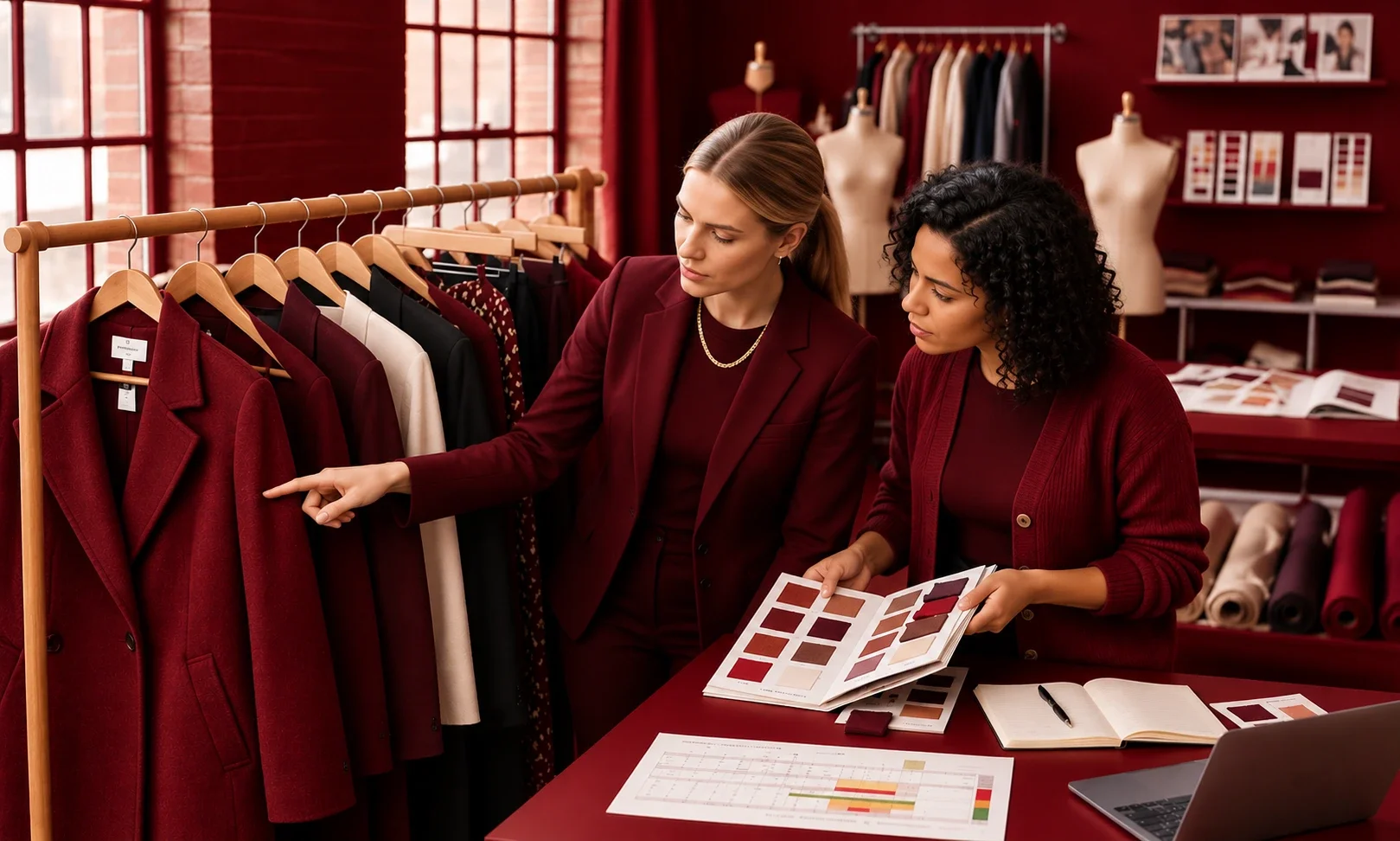
A focused collection makes the brand easier to understand and limits how many designs you must develop and test at once. Start with a clear point of view, then choose products that express it.
A first clothing collection should have no more than 2-4 SKUs. A small assortment gives each product a clearer job and limits development work.
Turn the brand idea into a tight first offer
Build a coherent capsule around one design choice or customer problem. Silhouette, material, fit, color or use can tie the pieces together. For example, a small line of travel pants and tops could focus on pockets and easy care.
Each style should support the same idea rather than compete for attention. Consider whether a customer can understand the collection at a glance and see why the pieces belong together. Keep colors and options manageable, since each variation can add work.
Develop, test and protect the product
A tech pack turns a design into manufacturer-ready details. It sets out measurements, materials, sizing and construction so the maker can follow the same instructions. Add clear drawings, fabric details, color references and trim requirements.
Order sample garments and check fit, measurements, fabric, stitching, print or embroidery, color and construction. Compare each sample with your tech pack, then note changes before approving production. Do not approve a bulk run from a sketch or digital mockup alone.
In 2026, a USPTO Section 1 or Section 44 application costs $350 per class when it meets the base application requirements. An application missing required information adds $100 per class. Free-form text instead of the Trademark ID Manual adds $200 per class, plus $200 for each additional group of 1,000 characters beyond the first 1,000.
A Section 1(b) intent-to-use application has later fees, based on the filing path. In 2026, the later amendment-to-allege-use or statement-of-use fee is $150 per class. Each extension request costs $125 per class. The USPTO trademark fee page lists application costs and related fees.
Do not approve a bulk run from a sketch or digital mockup alone.
How Should You Source and Schedule Production?
The right factory is the one that can make the required product to the right standard at a scale and pace the business can manage. Unit price is only one part of that choice.
A first apparel production run can require a 100-300-unit minimum. Ask about order size, quality and timing before you compare quotes.
Compare manufacturers on more than unit price
Look for a factory that specializes in your product type and can show how it checks quality. Clear communication matters when you need to explain changes or resolve a sample issue. Ask about capacity and whether the factory can handle your expected schedule.
Prepare a tech pack, size chart, reference images, fabric specifications and branding requirements before requesting a quote. Then ask each factory about its MOQ, price tiers, lead time, sample cost and revision rounds. Confirm deposit, balance and inspection terms too.
Compare quotes for the same product details and order size. A quote that leaves out labels or finishing may look cheaper than a complete quote. Ask what is included before you compare the totals.
Plan for sampling, production and cash timing
Map pattern development, sampling, grading and production before launch. Build in time to review samples and correct problems before the final run. A change to fit or fabric can affect several steps, so keep room for decisions.
Production minimums can leave you with unsold stock. A fashion business plan should account for a 90-120-day production-to-revenue lag. A low unit price can be a poor choice when it requires a larger run than you can sell.
Estimate when each payment falls due and when sales might bring cash back. A factory may require a deposit before it starts, while your customers pay only after the store opens. That gap can strain a small business even when the product has a healthy margin.
Use the production schedule to decide whether the order size and payment terms fit your cash plan. If they do not, discuss a smaller run or a different production approach before committing. A clear written record reduces confusion when a deadline shifts.
Confirm the MOQ, sample revisions, production lead time and payment milestones in writing before committing funds.
What Should the Launch Budget Include Beyond Manufacturing?
Shipping is a variable cost, so build it into the order economics before promising a delivery offer. Postage changes with parcel weight, destination and the shipping terms you offer.
In 2026, shipping often takes the following share of revenue. Check each order type against your own product weight and selling price.
| Shipment type | Weight or condition | Shipping cost as a share of revenue |
|---|---|---|
| Light products | Under 1 lb | 5%-10% |
| Medium products | 1-5 lb | 8%-14% |
| Heavy or oversized products | 5+ lb | 12%-22% |
| Orders meeting a free-shipping threshold | Meets the order minimum | 6%-12% |
| International or cross-border orders | Ships across a border | 15%-30% |
Actual parcel charges change by zone and weight. USPS Ground Advantage commercial rates effective October 4, 2026, show the difference: a 1 lb parcel costs $8.08 in Zone 2, $9.29 in Zone 5 and $11.22 in Zone 8.
For a 5 lb parcel, the same service costs $10.41 in Zone 2, $14.53 in Zone 5 and $20.24 in Zone 8. These charges can change the margin on an order with only one item, especially when the customer lives farther away.
Packaging also belongs in your order costs. Add boxes or mailers, labels and payment processing before setting a free-shipping offer. The right shipping price should still leave enough money to cover product costs and other business expenses.
The 2026 benchmark recommends testing a free-shipping threshold at 1.3-1.5 times AOV, or average order value. Test that threshold against AOV and contribution margin, which is the amount left after variable costs. Do not set free shipping only because competitors offer it.
Check the margin on a typical order after postage, packaging and payment processing are accounted for.
How Do You Prepare the Online Store for Apparel Returns?

Fit and sizing deserve special attention because they account for half of apparel returns. Clear fit details help customers judge clothing before they order.
Online apparel return rates can range from 20%-40%, while fit and sizing account for 50% of apparel returns. Make measurements easy to find before a customer adds an item to the cart.
Make fit and product details easier to judge
| Measure | Figure | What it means for the store |
|---|---|---|
| Online apparel returns | 20%-40% | Plan for returns as part of apparel sales. |
| U.S. ecommerce returns | About 19.3% of online sales in 2025 | Returns affect online retail beyond clothing. |
| Fit-and-sizing returns | 50% of apparel returns | Give shoppers useful fit and size details. |
Use an accurate size chart and include model or garment measurements. Describe fabric, stretch, cut and care in plain language. Real product photography should show the garment from useful angles and on different body types when possible.
Customers also need clear delivery information and fit content. Explain how a garment sits or moves, and give useful comparisons between sizes when you can. A well-built Shopify store can keep product details and checkout steps easy to use on mobile.
Set a clear, legally aware return policy
U.S. federal law does not require retailers to offer a general return or refund policy. Some states require conspicuous posting in certain cases, so check the rules where you sell. Arizona requires conspicuous posting for policy terms to be valid.
In Arizona, when no policy is posted, retailers must accept returns of goods purchased within 60 days, subject to stated conditions. California requires posting when a refund policy has unique requirements an average consumer would not expect. In some states, posting the policy can be necessary for its terms to be valid.
Return convenience can affect shopping choices: 82% of consumers consider free, easy returns a major factor, and 71% are less likely to shop again after a bad return experience. The 2025 Happy Returns and NRF report also examines how shoppers view return options.
Put delivery, return-window, condition and refund terms where customers can see them before ordering.
How Can You Build Demand Before Launch?
Start earning attention before the store opens so the first release is not the first time anyone sees the product. Early interest gives you a way to learn who wants the offer.
A waiting list and email updates make interest measurable. Sign-ups show interest, not guaranteed sales.
Gather an interested audience before inventory expands
Share behind-the-scenes details about product choices, fit, materials and production progress. Explain the brand story through decisions customers can see, such as why you chose a fabric or changed a pocket. Instagram and TikTok can help when your target audience uses those platforms.
Invite people to join an email list for useful updates, not a stream of vague teasers. Show a clear product detail or answer a real question in each message. A lead-generation plan for ecommerce can help shape sign-up offers and follow-up emails.
Use content and a soft launch to learn
A soft launch releases a product or company to a small, distinct audience. It lets you test product viability, gather feedback and refine marketing before a wider release. You can ask this group what confused them, what they valued and what stopped them from buying.
Preorders can test demand before a larger run, but customers need honest delivery expectations. State when you expect to ship and tell buyers if that date changes. Do not treat a sign-up or an informal promise as a paid order.
Use this short prelaunch list:
- Collect sign-ups through a clear email form.
- Share product evidence, such as a fit test or fabric detail.
- Invite a small test audience to view or buy the offer.
- Ask structured questions about price, fit and product details.
Keep notes on feedback instead of relying on memory. A few clear answers can show which part of the offer needs work before you spend more on reach. Use early feedback to revise the offer before expanding the audience.
What Should the Launch Calendar Look Like?
A first-time founder should plan on a longer runway than a repeat brand with an established supply chain. Six to nine months is a planning reference from first sketch to public launch.
Repeat brands can sometimes compress the timeline to 4-5 months, while first-time brands may need 12 months. Production can slip by 2-4 weeks. Leave room for delays instead of setting every task against a fixed launch date.
Start development months before the sales date
In the early months, define customer positioning, shape the collection and prepare tech packs. The middle months are for sourcing, samples and production sign-off. In the final months, arrange photography, store setup, product pages and launch communications.
A direct-to-consumer fashion launch plan example is a six-to-nine-month calendar that finishes product readiness and store testing before launch week. Treat the timeline as a working schedule, not a promise. If sampling or production takes longer, move the sales date rather than skip key checks.
Work backward from the date you hope to open the store. Give each task an owner and a deadline, even if you are doing every job yourself. A simple calendar makes blocked work visible before it threatens launch week.
Rehearse the final customer experience
Check the store on a phone and a computer. Count finished inventory, test payment methods, schedule emails and write fulfillment instructions. Ask someone unfamiliar with the store to find a size, place an order and locate delivery details.
Rehearse customer service with likely questions about sizing, order status and product care. Make sure you know how to find an order and send a clear reply. A Shopify setup guide covers store features and mobile checks.
Before opening, use this five-item launch checklist:
- Confirm stock against the order system.
- Test checkout and payment confirmation.
- Verify shipping settings and rates.
- Schedule the launch announcement.
- Prepare customer support replies and access.
Keep the public launch date flexible until production and store testing are both complete.
Which Numbers Show Whether the Launch Is Working?
Judge the first release by what customers buy and what the results tell you to change, not by attention alone. Item-level results help you see which products deserve another look.
Track sales and sell-through by SKU, conversion, CAC, customer feedback and repeat orders. If wholesale is a future channel, record buyer enquiries for 90 days after launch. Check sell-through at 2, 6 and 12 weeks; below 50% at 12 weeks can signal an inventory issue.
Make the next inventory decision from item-level sales and customer feedback, not from launch-day excitement.
A weak style may need a product, price or presentation change. A strong style still needs review before you reorder it. Compare remaining stock, production time, cash and signs that demand continues.
Review website visits and checkout behavior to find points that make buying harder. A growth-driven website process uses visitor data and feedback to guide changes. You can also use ecommerce retargeting to reach visitors who viewed products but did not buy.
Make the next inventory decision from item-level sales and customer feedback, not from launch-day excitement.
Conclusion
A strong first launch is a focused test of a real customer need, not a contest to release the biggest collection. A clear offer, tested product and workable fulfillment plan matter more than a large debut.
Your first sales can show what customers value and what needs another pass. Keep the next decision tied to what you can make, ship and support without straining the business.
Write a one-page brief naming your target customer, hero product, production model and maximum first-run budget. Set aside one hour today to draft those four decisions on a single page.