
To prepare for a professional review, gather a complete transaction history, keep the original evidence, and flag anything you cannot reconcile. This gives U.S. taxpayers a clear starting point for tax filing without pretending to calculate a final tax bill. Cost basis is the asset’s original cost, adjusted where applicable, used to calculate gain or loss when it is disposed of.
Selling a digital asset, exchanging it for another asset, or using it to buy goods or services may trigger a taxable event. Income and asset dispositions can require different reporting, so a single software total may not explain every tax result. Mining and staking rewards are typically ordinary income when received.
Reportable digital asset transactions remain reportable even if you receive no Form 1099-DA. A professional review is more useful when the transaction records show where figures came from and identify uncertain details. Keep the full history for the tax year, including records that support income and dispositions.
Treat every exchange, wallet, and income activity as part of the record, even if no broker form arrives.
Key Takeaways
- Gather transaction records from every account and platform.
- Keep original exports and supporting documents.
- Separate income activity from asset dispositions.
- Flag missing records instead of guessing.
- Organize everything by tax year for review.
How to Prepare Records for a Professional Review of Crypto Transactions Across Every Account
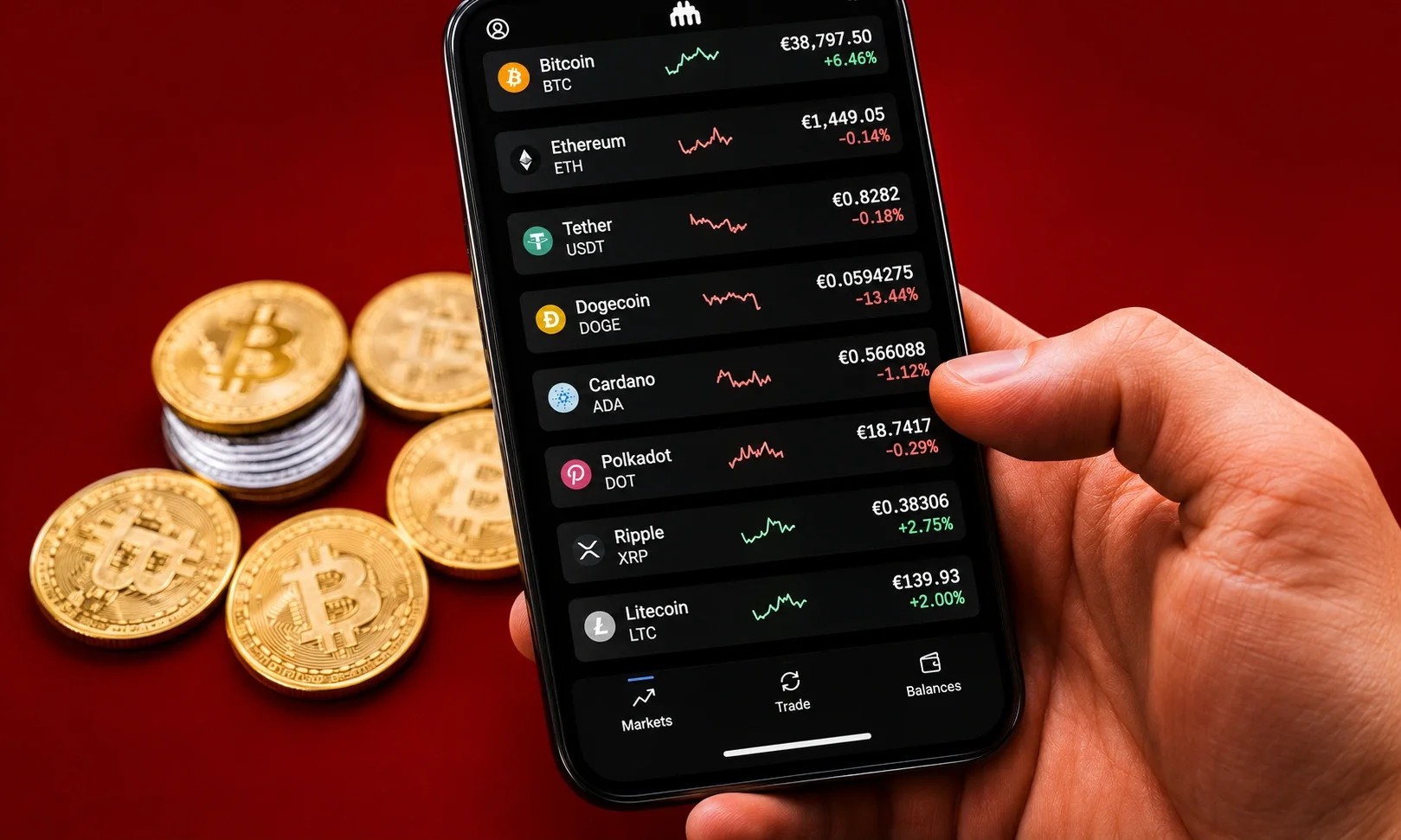
Start with a list of every place you held or moved digital assets during the tax year, including accounts you no longer use. A complete inventory gives your reviewer the full scope of your crypto activity, not just what appears on one exchange.
Include exchanges, self-custody wallets, chains, DeFi protocols, staking and mining accounts, NFT platforms, and closed or inaccessible services. IRS recordkeeping rules call for records that support the positions on your tax return, including receipts, sales, exchanges, dispositions, and fair market value at transaction time. IRS recordkeeping guidance sets that standard.
Mark an account as incomplete rather than leaving it off the inventory when its history is unavailable.
Inventory exchanges, wallets, and platforms
Record these five details for each platform or wallet so your list remains useful during review:
- Platform or wallet name.
- Account identifier or public address.
- Tax year covered.
- Activity type, such as trading, staking, or NFT use.
- Access limits or missing record details.
A wallet with no sales still matters if it received assets transferred from an exchange. Its deposits can help connect an exchange withdrawal with later activity, and an empty-looking wallet may still hold assets with a purchase history.
Note the activity that needs context
Record what happened, not just which platform was involved. Note purchases, sales, exchanges, payments, rewards, transfers, and DeFi activity. For decentralized finance, capture the wallet address, transaction hash, tokens involved, U.S. dollar fair market value at the time, and protocol used.
Include unusual events such as forks, a failed transaction, or a platform shutdown. A short note can explain why a transaction appears twice, why an account stopped producing records, or why a token’s displayed value differs across services.
Use clear labels for chains and accounts that share similar names. If a platform covers several networks, list each chain separately when it holds distinct activity or records. Keep questions visible beside the affected account, rather than relying on memory during a later review.
Which Transaction Records Should You Download and Preserve?
Download records from each platform before account access changes or old histories become harder to retrieve. Original files are stronger support than a tax software summary alone, especially when a review turns on dates, amounts, or transaction details.
For each disposal, keep evidence of the asset description, acquisition date, disposal date, U.S. dollar proceeds, cost basis, gain or loss, and holding period. An exchange export can show activity without proving the asset’s original cost basis. A blockchain explorer can show wallet activity, but cannot identify the taxpayer behind an address by itself.
Save exchange and financial-account files
Exchange histories, explorer records, bank and credit card statements, purchase confirmations, withdrawal confirmations, dated balance screenshots, and software calculations can all support tax positions. Each record has a different job, so keep related files together rather than expecting one document to prove every detail.
| Record type | Useful evidence | Key limitation |
|---|---|---|
| Exchange CSV or statement | Trades, deposits, withdrawals, and dates | May omit complete cost basis |
| Blockchain explorer record | Wallet transactions and transaction hashes | Does not identify the wallet owner |
| Bank or card statement | Fiat payments and cash withdrawals | May not identify the digital asset received |
| Email or dated screenshot | Purchase confirmation or displayed balance | May show only one event or point in time |
Add on-chain evidence and transaction context
A blockchain explorer can provide self-custody wallet transaction records, while exchange CSV exports generally list transactions rather than complete cost basis. Use both types where available, then retain statements or confirmations that connect a digital asset activity to a bank payment or platform account.
Kraken offers account statement, trades, ledger, and balance export types in its Documents Center. Select the needed export and date range, then request a CSV or PDF export. Trades and ledger exports need start and end dates; a balance export needs one date.
Kraken exports may take a few minutes or up to a week to process. Kraken does not directly export order history, but its trades export can help reconstruct order activity. Keep the untouched original exports alongside any cleaned or reformatted copies.
How Do You Match Wallet Transfers and Rebuild Cost Basis?

A withdrawal from an exchange and a deposit to your own wallet are usually two records of one movement, not two separate disposals, when you can match them. Look for the same transaction hash; if none is available, compare the asset, amount, and time. A reliable match keeps the history connected.
A matched self-transfer is not a sale, and the original cost basis moves with the assets. The units retain their purchase history when they move between accounts you own. That continuity matters when you later calculate gains losses or explain a difference between wallet and exchange records.
Match the sending and receiving records
Compare the exchange withdrawal with the wallet deposit and note the evidence used. A matching hash is the clearest link. Without one, check whether the asset, amount, and timing fit, and retain a note about any fee or small amount difference.
Do not treat every wallet deposit as a new purchase. It may be an incoming self-transfer, a reward, a payment, or another type of receipt. Classify it only after you have checked the related records and its transaction context.
Track units and basis under the 2025 rules
For digital asset acquisitions and dispositions on or after January 1, 2025, basis-identification rules apply by wallet or account. FIFO is the default when you do not specifically identify the units sold. FIFO means the first units acquired are treated as the first units disposed of.
Specific identification needs records showing which units were sold and their basis. You must identify those units by the time of sale, not make the choice afterward. Keep evidence that ties the selected units to their acquisition dates and cost.
Revenue Procedure 2024-28 allows an eligible taxpayer to allocate unused basis through a specific unit allocation method or a global allocation method. The choice is irrevocable and applies separately to each type of digital asset. Retain records of remaining units in each account, unused basis units, original basis, acquisition dates, and the method used.
Keep evidence of unit identification made by the time of sale, because a later choice cannot retroactively establish specific identification.
How Should You Reconcile Form 1099-DA and Tax Forms?
Treat Form 1099-DA as one broker’s view of proceeds, then reconcile it to the full record before filing. Check the figures against your transaction ledger, exchange statements, and wallet activity, since no single broker statement captures every account.
For tax year 2025, brokers generally report gross proceeds on Form 1099-DA but are not required to report cost basis. Do not treat reported proceeds as a complete calculation of your capital gain or loss. Some brokers may report basis voluntarily for noncovered assets.
Compare broker proceeds with your own ledger
Form 1099-DA applies to digital asset sales effected on or after January 1, 2025. A digital asset is a covered security for this form only when acquired after 2025 in an account where the broker provided custodial services, and it remained there until the broker disposed of it.
| Record or form | What it reports | How to use it |
|---|---|---|
| Form 1099-DA | Broker-reported gross proceeds | Compare proceeds with transaction records |
| Form 8949 | Digital asset disposition details | Report each applicable gain or loss |
| Schedule D | Capital gains and losses totals | Carry over the Form 8949 results |
| Schedule 1 | Income from forks, staking, and mining | Report qualifying income separately |
Prepare the capital-gain reporting trail
Compare each broker amount with personal transaction records, exchange statements, and wallet activity before filing. A difference may reflect a transfer, a missing account record, or a fee. Keep the supporting detail and write down the reason for each adjustment.
Digital asset disposition gains and losses go on Form 8949 and flow to Schedule D. The 2025 Form 8949 instructions use boxes G, H, and I for short-term digital asset transactions, and boxes J, K, and L for long-term transactions.
Do not use boxes C or F for those digital asset transactions. Income from forks, staking, and mining is reported separately on Schedule 1 of Form 1040. Keep a written explanation for every difference between broker-reported proceeds and your transaction ledger.
How Should You Document Income and Complex Activity?
A transaction hash shows that activity occurred, but it may not explain whether the activity was income, a transfer, or a disposal. Context matters when you give the tax professional transaction records, especially for activity outside a simple purchase or sale.
Capital-asset dispositions differ from receipts such as forks, staking rewards, and mining rewards. Mining and staking rewards are typically ordinary income when received. Digital assets received as payment for services or business activity may need separate income reporting. Note what you did, what you received, and when it arrived.
Record the fair market value in U.S. dollars at the relevant time for income activity. Save the date and a short explanation of how the receipt arose. This gives the reviewer context for deciding whether a row belongs with income or an asset disposition.
DeFi activity often needs more than a wallet history. Pair each transaction with the protocol, tokens involved, wallet address, transaction hash, and time-specific U.S. dollar value. Describe the action in plain language when the protocol’s label is unclear.
A token swap, liquidity pool interaction, or other protocol action may produce several on-chain entries. Keep the related entries together and note which ones appear to belong to one activity. That context helps the reviewer examine the event without guessing from a hash alone.
Crypto tax software is a calculation aid, not evidence by itself. Check that the software supports the exchanges, wallets, and chains in your history. It should also support wallet-by-wallet basis tracking, Form 1099-DA reconciliation, and Form 8949 output.
Review imported results for missing accounts, duplicate rows, and deposits without a known origin. Software can calculate from the records it receives, but it cannot supply evidence that was never captured. Save the row-level history behind every software summary so a reviewer can trace the calculation.
What Should You Put in the Final Review Packet?
A reviewer should be able to follow a reported number from the return back to a transaction row and its supporting evidence. A clear handoff reduces guesswork and helps keep missing information visible during the review.
Use a short checklist to confirm that the packet contains the records and explanations the tax professional needs:
- Account and wallet inventory.
- Original exports and statements.
- Reconciled, row-level transaction history.
- Gain and loss calculations with holding periods.
- Income records and fair market value support.
- Exceptions log listing missing records or unresolved classifications.
Keep complete records for receipts, sales, exchanges, other dispositions, and fair market value at transaction time.
Label each file with the tax year and its source, such as an exchange name, wallet address, or bank account. Preserve original files even when you also provide a cleaned spreadsheet. The original lets a reviewer compare your working version with the first export.
Never send private keys or seed phrases. Public wallet addresses and exported records are enough to review transaction activity. If you use read-only access, agree on the method with the tax professional before sharing account information.
Keep row-level transaction history behind any tax software summary. If you used the Revenue Procedure 2024-28 allocation, include records of remaining units, unused basis, acquisition dates, and the allocation method. Those details support the treatment shown in your calculations.
Use the exceptions log to identify what is missing, what remains uncertain, and which transaction needs a decision. Send an exceptions log with the packet so open questions are visible rather than buried in the totals.
Conclusion
A review is most productive when the transaction history and its supporting evidence can be followed from source to reported result. Complete records give a tax professional a sound basis for checking your digital asset reporting, while uncertain details are easier to address when you identify them instead of filling gaps silently.
Organize the files by tax year and schedule a review with a qualified U.S. tax professional. Before the appointment, confirm that every account is represented and put unresolved items in a short, separate list.