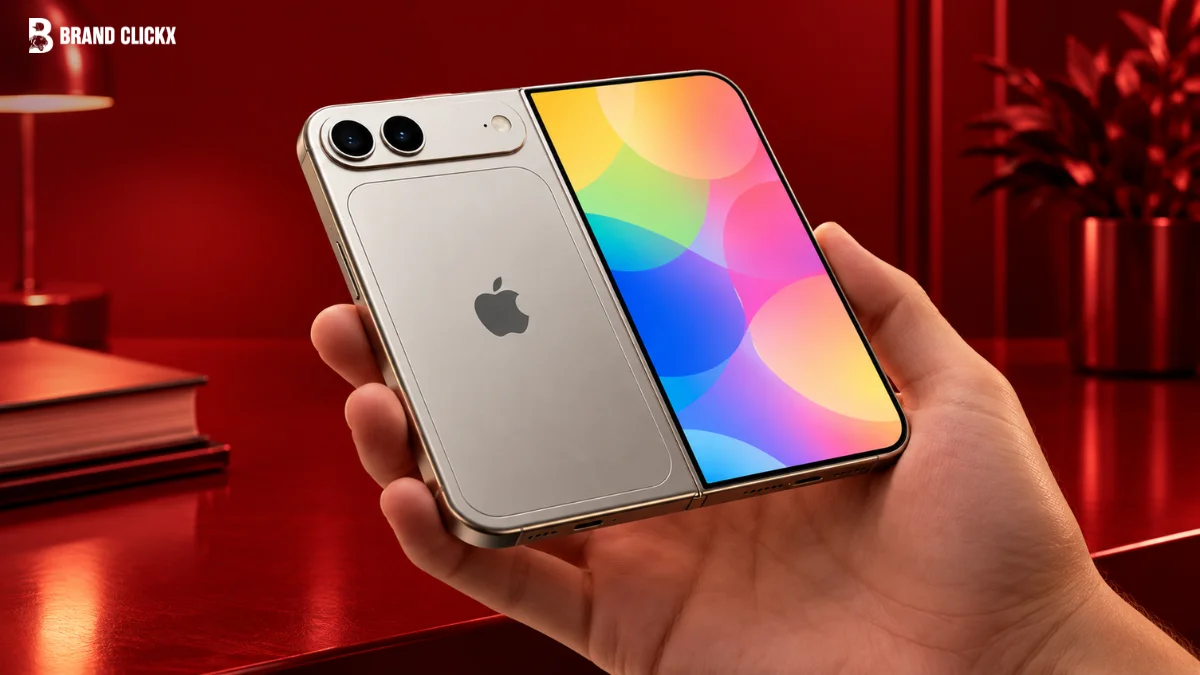
Took Apple long enough. Years of leaks, rumors, people online swearing it would never happen, and then on September 9, 2026, it just… happened. The iPhone Duo. Apple’s first foldable phone.
Here’s what stood out to me reading through everything Apple put out. They didn’t try to just fold a normal iPhone in half and ship it. They built two separate experiences into one device. Closed, it acts like a normal phone. Open it, and suddenly it’s closer to a small tablet.
That matters more than it sounds. If it actually works the way Apple’s pitching it, this thing could be genuinely good for video, multitasking, working on the go, all the stuff a regular iPhone screen feels cramped for. Let’s go through what’s actually in it.
Key Takeaways
- iPhone Duo is Apple’s first foldable iPhone.
- 5.4 inch outer display, 7.6-inch inner display.
- Runs the new A20 Pro chip.
- Supports Split View and Apple Pencil.
- 48MP Fusion cameras with foldable-specific features like Duo Preview.
- iOS 27 was rebuilt around the bigger screen.
- Starts at $1,999 for 256GB.
- Pre-orders start October 16, 2026; ships October 23.
- Strongest points: the screen, the software, the build quality.
- Weakest point: the price, easily.
What’s the Apple Foldable iPhone Called, and What Is It?
iPhone Duo. That’s the name. Unlike the flip phones you’ve seen from Samsung, this one folds like a book, not a clamshell. Closed, you’ve got a 5.4 inch outer screen. Open it, and there’s a 7.6 inch OLED display underneath.
Apple’s saying this is the biggest screen they’ve ever put in an iPhone. Not hard to believe. The whole pitch is simple: small phone for quick stuff, bigger screen when you actually need it.
Design
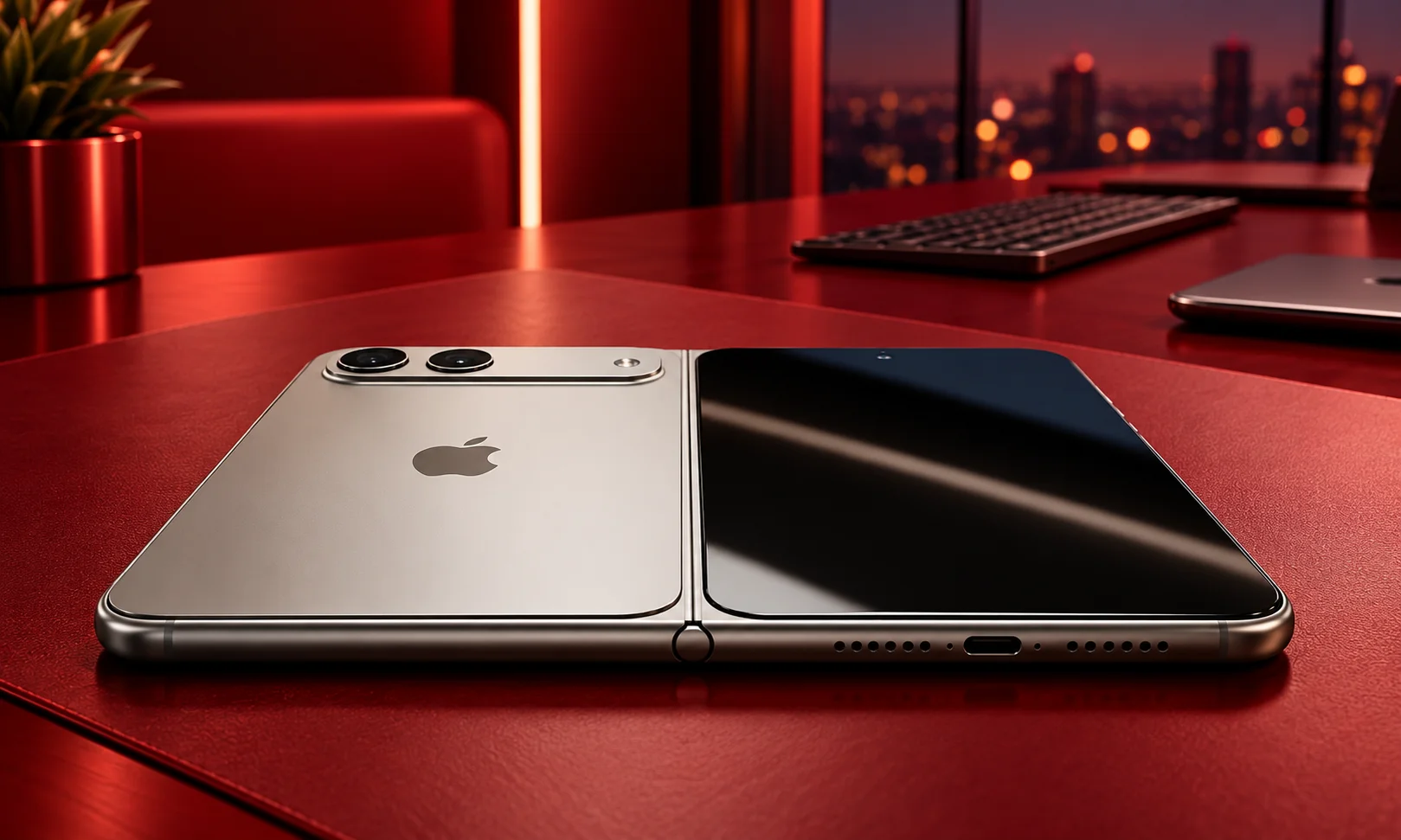
Titanium body. Two colors, Star White and Night Sky. The hinge is honestly kind of wild on paper, over 100 components just to make sure it opens and closes smoothly and doesn’t feel cheap after a year of use. Opened up it’s 5.2mm thick, weighs 254 grams. Closed, it’s short and stubby, more like a passport than a phone.
Inner screen’s got a nano texture coating too, cuts down glare and hides the crease better than you’d expect.
You can tell Apple wasn’t trying to make an experiment here. They wanted this to feel like a real iPhone, just one that happens to fold.
Two Screens, Two Jobs
Outer screen handles the boring stuff. Texts, calls, quick browsing, checking an app real fast. You don’t need to open the phone for any of that. Inner screen is where it gets interesting.
Split View Actually Changes How You’d Use This
iOS 27 got reworked so the bigger screen can run two apps side by side. You can even open two windows of the same app. Safari next to Safari, say, if you’re comparing prices while shopping.
Both screens run ProMotion up to 120Hz, support Always On display, HDR, and hit up to 3,000 nits outdoors. Inner screen works with Apple Pencil over USB C too.
Performance
New chip. A20 Pro. 2 nanometer process, 6 core CPU, 7 core GPU, dual 16 core Neural Engine. Apple’s claiming 35 percent better sustained performance over the 17 Pro.
Obvious problem with any foldable: thin body, big screen, lots of heat. Apple’s answer is a custom vapor chamber and a beefed up cooling system. Should help if you’re gaming or running something heavy for a while.
Point is, the chip isn’t just there to be fast. It’s there so the big screen, the cameras, and all the new AI stuff don’t make the phone feel sluggish.
Cameras
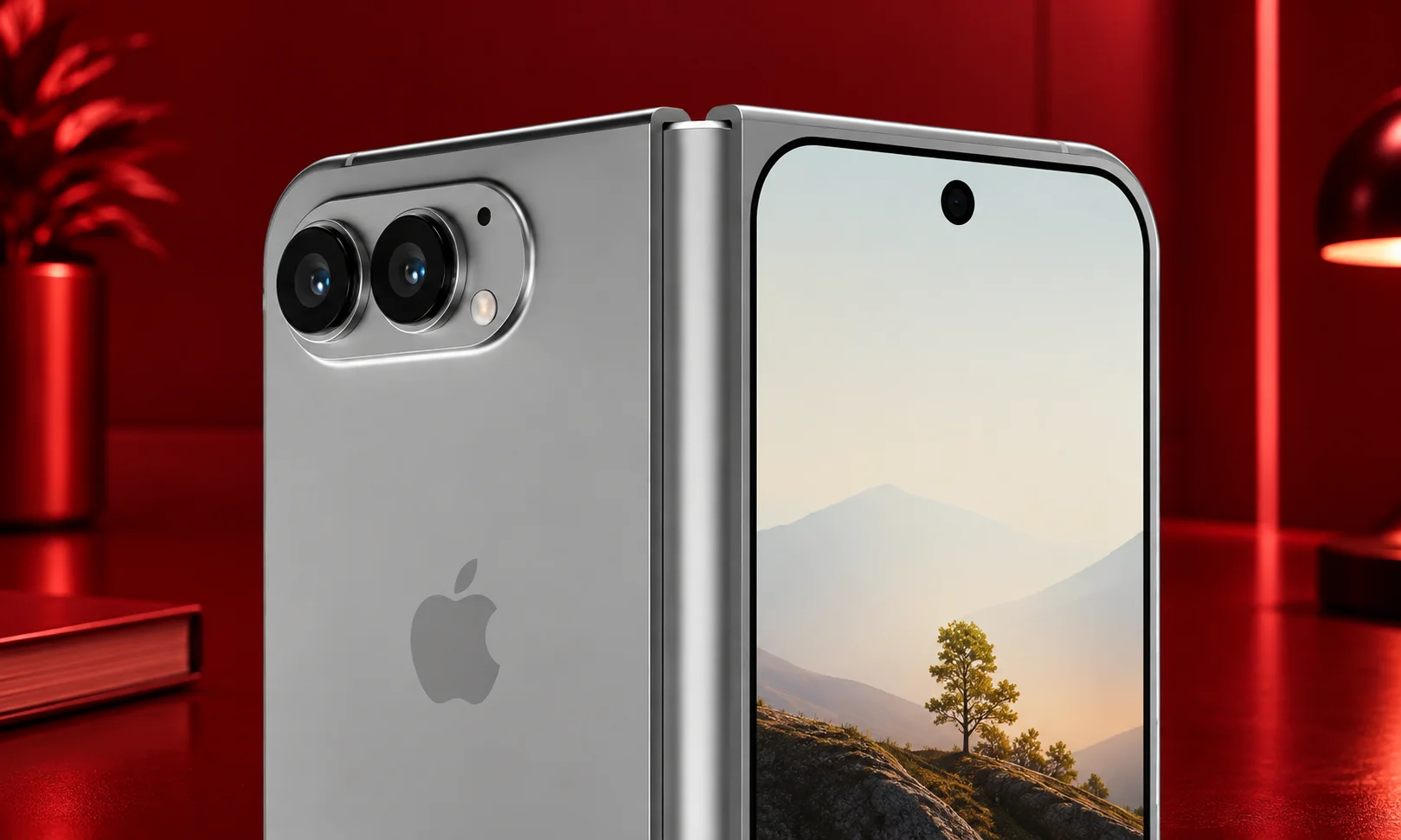
48MP Fusion Main, 48MP Fusion Ultra Wide. Main camera gets an optical quality 2x zoom too. One feature I actually think is clever: Duo Preview. Whoever’s getting photographed can see themselves on the outer screen before the shot’s taken. Small thing, but genuinely useful.
Because it folds, the phone can literally stand itself up. No tripod needed for video calls or group shots or timelapses.
There’s also Smart Take, which uses on device AI to try and grab the photo at the right moment automatically.
None of this feels bolted on. Apple actually used the fold to rethink how the camera behaves, not just shrink the phone.
Software
Hardware means nothing without software backing it up, and Apple clearly knew that. iOS 27 responds to how you’re holding the phone, open, closed, rotated. Split View lets you run two apps at once without constantly switching back and forth. Safari next to Notes. Video playing while you text someone. That kind of thing.
Apple says apps like Netflix, Zoom, and Slack are already adapting to the format. Makes sense, Apple owns both the hardware and the OS here, so that integration’s going to be tighter than what you’d get on other foldables.
AI and Siri
New Siri ships with this. Apple says it understands personal context, can work with whatever’s on your screen, and actually helps you finish tasks instead of just answering questions.
Most of it runs on device. Private Cloud Compute kicks in only when something needs more power than the phone alone can handle.
Bigger screen means you can keep Siri visible while working in another app. Doesn’t sound huge until you actually try to use an assistant on a normal sized phone screen and realize how cramped it feels.
Battery
Two batteries, one on each side, working as a single system. Kind of had to be, given the size. Apple’s numbers: up to 31 hours video playback on the inner screen, 44 hours on the outer screen, 24 hours if you’re using both roughly evenly. Fast charging gets you to 50 percent in around 20 minutes.
Real world battery life is going to depend on what you’re actually doing with it, obviously. Brightness, gaming, how much you’re using that big inner screen.
Price
Here’s where it gets rough for a lot of people. $1,999 for the base 256GB model in the US. Goes up from there through 512GB, 1TB, and 2TB.
Nearly two grand for a phone. That’s a real number, not a typo. First generation foldables have always been expensive, so this isn’t shocking, but it’s still going to be the biggest reason a lot of people skip this one.
When You Can Actually Buy It
Pre-orders open October 16, 2026. It ships October 23, 2026, in more than 70 countries to start, with Apple planning to add more markets later that month. This isn’t a concept phone sitting in a lab somewhere. It’s landing on shelves soon.
Is It Actually Worth Buying?
Depends entirely on how you use your phone. If you’re mostly texting, scrolling, taking photos, normal stuff, a regular iPhone still makes more sense. Save your money.
But if you want something that can genuinely double as a work device, the Duo starts looking a lot more interesting. Split View, Apple Pencil, that A20 Pro chip, the camera tricks, none of that exists on a normal iPhone. Just know you’re paying luxury prices for it.
Why This Is Different From Other Foldables
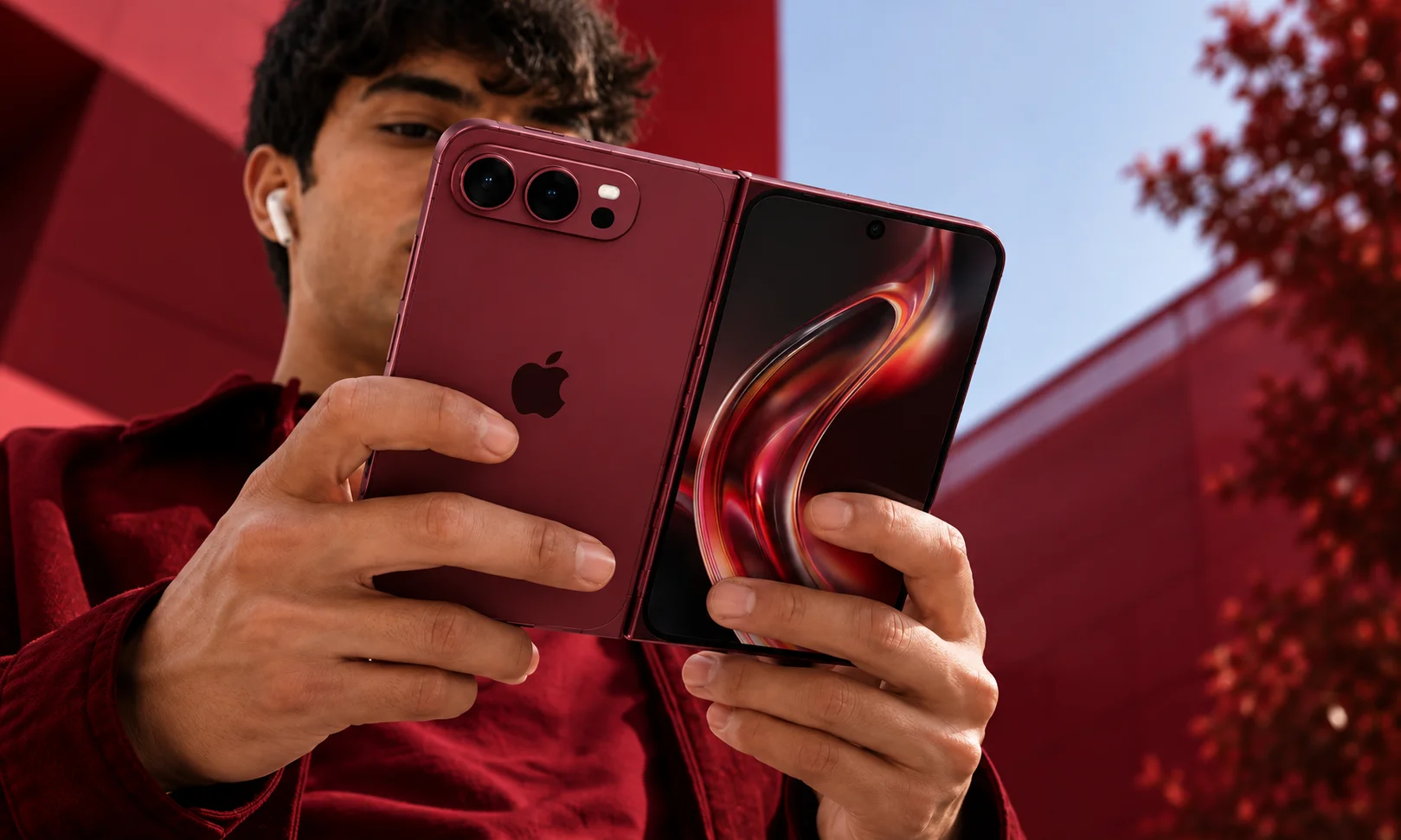
Apple’s late to this party. Samsung and Huawei have been doing foldables for years already. But being late has an upside. Apple got to watch everyone else’s mistakes first, creases, hinges breaking down, clunky software, bad battery life. All the stuff that’s made foldables feel like a gamble up until now.
Apple’s approach is tighter integration. Hinge, screens, cameras, chip, battery, software, all designed around one device from the start instead of stitched together after the fact. Whether that actually pays off will be clearer once people have lived with the phone for a while, not just read the spec sheet.
Where This Info Comes From
Everything you just read came straight from Apple’s actual September 2026 announcement and the specs they published, and I checked it against what established tech outlets were reporting too. Apple’s already confirmed the name, the design, the specs, the pricing, all of it. So none of this is rumor anymore. It’s just what’s real.
If you’re actually thinking about buying one, go with what Apple’s officially said. Don’t go off those old leaks floating around before the event that guessed a totally different name, price, or release date. Those are outdated now.
FAQs
So is this actually out, or still just rumors?
It’s out. Real, official, announced September 9, 2026. They’re calling it the iPhone Duo.
What’s it called again?
iPhone Duo.
How big is the screen actually?
Closed you get 5.4 inches. Open it up and you’re at 7.6.
What am I paying for this thing?
$1,999 minimum, and that’s just for 256GB. Need more space, you’ll pay more for it.
When do I actually get to buy one?
October 16 for pre-orders, October 23 it actually ships. More than 70 countries get it right away too.
Does Apple Pencil work with it?
Yep, over USB-C, and it works on both screens too.