You’ll find symbolic stars in almost every culture on the planet. Strip away the differences, and they usually circle back to a handful of ideas: direction, hope, protection, achievement. What really changes things is the number of points. Four points and it starts feeling like something you’d find on an old map. Eight points and suddenly it’s less about direction and more about balance, something bigger, almost cosmic. Same basic shape both times, but the point count alone shifts what it’s trying to say.
What does a star symbol actually represent?
It depends on what you’re looking at and how many points it has. A star on a compass doesn’t mean the same thing as a star on a hotel review. And that’s different again from a star tattooed on a sailor’s arm. But a few ideas keep showing up again and again: direction, protection, ambition, and the universe itself.
The point count shifts things quite a bit:
Four points tends to mean direction, travel, or finding your way somewhere. Five points is about balance, people, achievement, and often national identity. Six points leans toward harmony, usually the balance between two opposing forces. Eight points brings in ideas of order, renewal, and something a bit more cosmic.
None of this is a hard rule, though. Move the same star shape into a different culture and you’ll often get a completely different reading.
Key Takeaways
- Stars turn up in almost every culture, and no matter where you look, they usually come back to the same few ideas, direction, hope, protection, achievement.
- What actually changes the meaning is the point count. Four points and it feels like something off an old map. Eight points and it stops being about direction, leaning more toward balance, something bigger than just finding your way.
- None of this started recently either. People were carving stars into clay tablets in Mesopotamia way before anyone thought to put one on a flag.
- That’s probably why brands still reach for them today too, a star just says quality or trust right away, no explaining needed.
Where this all started
Sumerian scribes were already carving eight-pointed stars into clay tablets to represent gods, the heavens, and royal power, long before anyone thought to put a star on a flag.
Egypt had its own relationship with stars too, deeply tied to religion. The hieroglyph sba, meaning star, showed up in writing connected to the afterlife and the heavens. Some tomb ceilings were even painted a deep blue and scattered with little yellow stars, basically an attempt to recreate the night sky indoors for the dead.
And then there’s navigation. That practical use is probably where the whole “stars mean guidance and safety” idea really took hold.
How the point count changes everything
Four points
Point a compass in any direction and this shape just makes sense right away, north, south, east, west, four lines, four points. That’s why old maps and compass roses leaned on it so heavily. Even today, whenever you spot a four-pointed star somewhere, it’s usually carrying the same old meaning, pointing you toward direction, focus, staying on the right path.
Five points
Different traditions have read this shape in different ways over the years, sometimes as a stand in for the human body, sometimes tied to the five senses, sometimes linked to the five classical elements, earth, air, fire, water, and spirit. It’s also the star you’ll run into most on national flags, usually there to represent unity, independence, or whatever bigger goal a country is reaching for.
Six points
This shape gets around. Flags, logos, tattoos, jewelry- it’s everywhere, probably because it’s simple enough to work at almost any size.
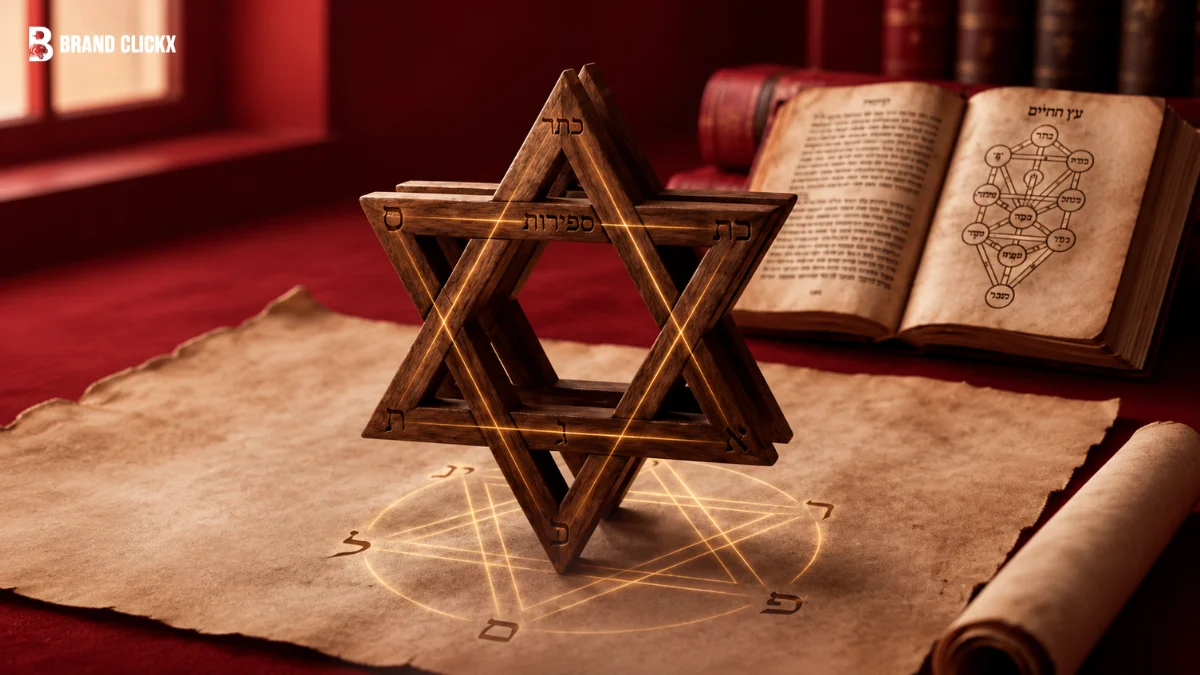
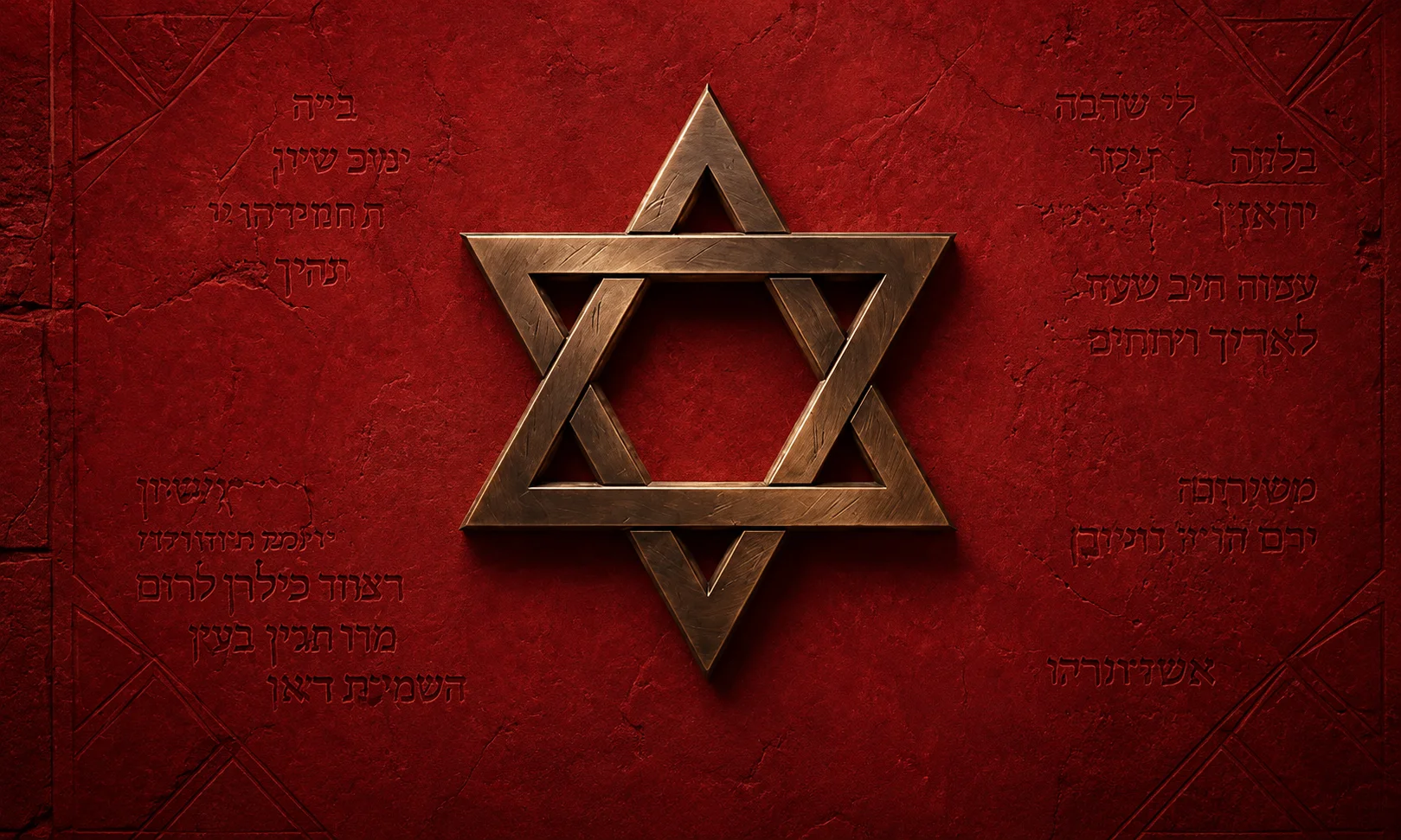
The construction is straightforward too. Take two triangles, flip one upside down, stack them on top of each other. Six points, done. Since the triangles pull in opposite directions, people started reading it as a symbol of balance, two forces pulling against each other but somehow staying steady.
The Star of David is the version most people know, central to Jewish identity and sitting right on Israel’s flag. Hinduism has its own take called the Shatkona, standing for the union of Shiva and Shakti.
Seven points
Seven is just an awkward number geometrically. It doesn’t split evenly into 360 degrees, so drawing a clean heptagram actually takes some careful math, unlike most of the other stars on this list.
Older traditions connected the seven points to the seven classical planets, Sun, Moon, Mercury, Venus, Mars, Jupiter, Saturn, and from there to old ideas about metals and nature. It’s not just a history footnote either. The Commonwealth Star on Australia’s flag has seven points, and the Cherokee Nation uses one to represent its seven traditional clans.
Eight points
Walk through almost any collection of Middle Eastern or Mediterranean art and the octagram keeps showing up. The Rub el Hizb is the one you’ll recognize most, just two squares laid over each other, and it’s carved into old Islamic manuscripts and mosque walls all over, usually to mark off a piece of text or round out a bigger design.
This shape is older than Islam too, though. Way back in ancient Mesopotamia, people used the same eight points for Ishtar, a goddess tied to Venus. Her star eventually came to mean renewal, the seasons shifting from one to the next.
Twelve points
Getting a twelve-pointed star to look clean on paper is genuinely fiddly, there’s a lot of geometry packed into it. But people kept drawing it anyway, probably because twelve already means something to us. Twelve months. Twelve zodiac signs. A star with that many points landing on ideas like time and cycles and things looping back around isn’t really a stretch.
You don’t have to dig through old texts to find it either. It’s sitting right on the flags of Argentina and Uruguay, the Sol de Mayo, and it’s still doing the same job today, standing for independence and national identity.
A quick side-by-side
| Points | Common name | Where it comes from | What it tends to mean |
|---|---|---|---|
| 4 | Compass star | Maps and navigation | Direction, focus |
| 5 | Pentagram | Ancient traditions, modern flags | Balance, unity, protection |
| 6 | Hexagram | Middle Eastern and Asian traditions | Harmony, balance |
| 7 | Heptagram | Historical European traditions | Planets, natural cycles |
| 8 | Octagram / Rub el Hizb | Islamic art, ancient Mesopotamia | Order, symmetry, renewal |
| 12 | Dodecagram | Calendars, early astronomy | Time, cycles, completion |
How different cultures used stars
Islamic art didn’t really focus on people or animals. Geometry took over instead, and stars became a big part of that. You can see it in old mosques and traditional tile work, eight pointed and twelve pointed stars everywhere, mixed in with polygons and repeating lines. The patterns get pretty detailed, but somehow they never look cluttered.
European heraldry went in its own direction. Two versions come up a lot. The mullet is a plain, straight-edged star, the kind you’d see on a shield or a family crest. The estoile bends its points into wavy curves instead, meant to look like light actually flickering. Sailors later borrowed the idea and turned it into the nautical star tattoo, something tied to navigation, but really more about hoping to make it back home safe.
Over in East Asia, stars played a different role, mostly showing up in early astronomy. Old sky charts grouped stars to track the seasons and keep time. But people weren’t just looking at them as objects floating up there. Stars were woven into something much bigger: ideas about the universe itself and how human life fit into all of it.
Why stars are everywhere in modern design
Stars are honestly hard to escape once you start noticing them. Open pretty much any app, walk into any store, and there they are, logos, ratings, jerseys, ads. Part of the reason designers keep reaching for this shape is simple: it still reads clearly even when it’s tiny, shrunk down to almost nothing on a screen.
The five star rating system is probably the easiest example to point to. Hotels, restaurants, app store reviews, it’s all running on the same basic logic, more stars just means better.
Companies and sports teams use the star a bit differently, more as a stand-in for ambition or achievement. It’s a fast way to say “this is excellent” without actually writing the word out.
And then there’s the everyday, practical version. That small star icon you tap to save or bookmark something, that’s the same shape again, just doing a totally different job now.
A few things people get wrong about stars
“A star symbol looks like a real star.“ Not even close. Real stars are just massive balls of superheated plasma, no points anywhere. The pointed shape is something humans invented to suggest light shining outward.
“Every star means the same thing.” Definitely not. Context changes the whole meaning. A star on a flag says something about a country. A star on a map is just telling you which way to go.
“The number of points doesn’t matter much.” Actually, it does. A four-pointed star and an eight-pointed star come out of completely different histories and carry completely different weight. Both the shape and where you see it matter.
If you’re designing with stars
A few things worth keeping in mind. Think about the cultural context your audience is coming from, so you don’t send a message you didn’t intend. Test how it looks small too, since a detailed twelve-pointed star can turn into a blurry mess on a phone screen. And don’t overload the design. A couple of well-placed stars look intentional; too many just start looking cluttered.
FAQS
Why do people draw stars with points at all?
Real stars don’t even look like that. No points, no shine lines, just a glowing ball of gas from far away. So where did the pointed shape come from? People just needed a simple way to draw “light shining.” That’s it. Nothing deeper going on.
What does a five pointed star mean?
Depends where you’re looking, honestly. See it on a flag? Probably means national pride or identity. See it on a map? Just marking a spot. Somewhere else, it might be about protection or balance. There’s no single answer here. The place you find it tells you more than the shape itself.
What about a six pointed star?
Most people’s first guess is balance or harmony, and yeah, that’s usually close. But start looking at different religions and cultures and it gets messier. It’s not really one meaning. It bends a little depending on who’s using it and why.
And an eight pointed star?
Kind of a mixed bag, this one. Order, renewal, balance, sometimes something more spiritual or cosmic. You’ll spot it in old religious art from all over the place, and every culture seems to put their own small spin on what it means.
Why do so many flags have stars on them?
Because a star does a lot of work without saying a single word. Slap one on a flag and it can mean unity, independence, hope, or just pride in your country. Simple shape, big message.
Why do logos love stars so much?
Two reasons, really. People spot the shape instantly, even tiny on a phone screen. And there’s just something about a star that feels like quality or trust, without a brand having to explain why.