You measure your driveway, check the area twice, and still wonder: “How much gravel should I actually order?” Many homeowners face the same problem ordering too little creates delays, while ordering too much leaves expensive material sitting unused.
A gravel calculator helps remove that guesswork by turning your measurements into an estimate of cubic yards, tons, bags, and sometimes project cost. Instead of relying on rough assumptions, you can plan your gravel project using the length, width, depth, and gravel type.
In this guide, you’ll learn how gravel calculators work, how to calculate gravel manually, how much gravel different projects need, what affects accuracy, and how to avoid common ordering mistakes.
Whether you are planning a driveway, patio, walkway, drainage system, or landscaping project, the goal is simple: understand your numbers before you place an order.
AI Overview
A gravel calculator estimates how much gravel you need based on your project measurements, gravel type, and desired depth. It converts your area into volume measurements such as cubic yards or cubic metres and can also estimate weight in tons and material cost.
You typically enter length, width, depth, and gravel type to receive a quantity estimate. These tools are commonly used for driveways, patios, paths, drainage layers, and landscaping projects.
Key Takeaways
- A gravel calculator estimates volume, weight, bags, and possible project costs before ordering material.
- Most residential driveways need around 4–6 inches of gravel depth, according to driveway gravel guidance from EANO.
- The basic calculation uses length × width × depth to find gravel volume.
- Gravel type affects weight because materials have different densities.
- Adding around 10% extra material helps account for compaction, leveling, and irregular shapes.
- Online calculator results are estimates because local material density and prices can vary.
- Cost estimates should be adjusted using local supplier prices and delivery fees.
How Do You Calculate How Much Gravel You Need?
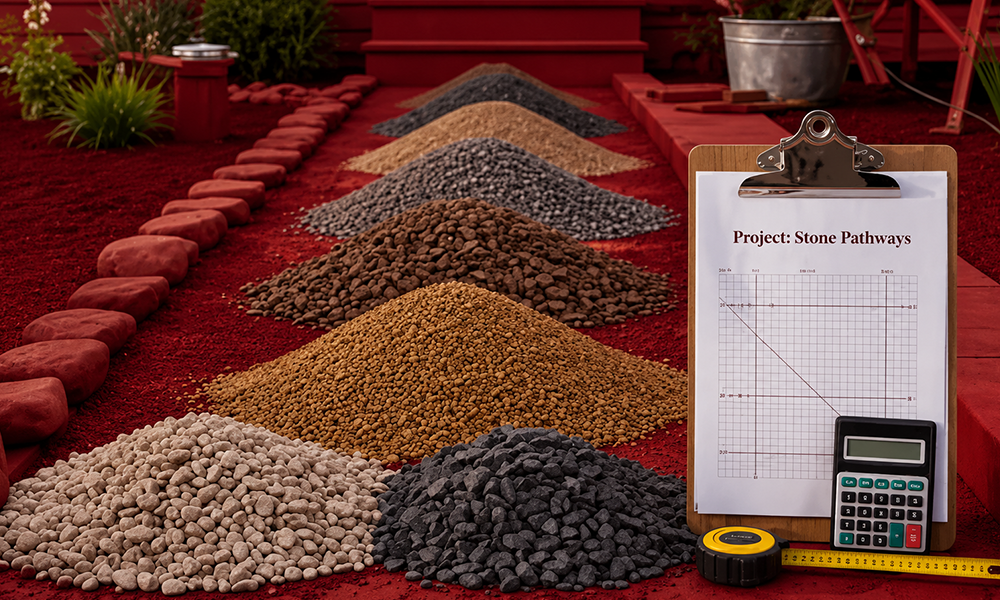
To calculate gravel needed, multiply the length, width, and depth of your project area to find volume. Convert the result into cubic yards by dividing cubic feet by 27. Then convert volume into tons using the gravel density. Most projects should include an additional 10% material allowance for waste and compaction.
What Is a Gravel Calculator?
A gravel calculator is an online construction and landscaping tool that estimates the amount of gravel required for a specific project.
Instead of manually converting measurements, the calculator processes your project size and provides an estimate in useful formats, including:
- Cubic yards
- Cubic metres
- Tons or tonnes
- Number of gravel bags
- Estimated material cost
These calculators are commonly used for driveways, walkways, patios, drainage systems, and decorative landscaping.
Modern calculators go beyond simple volume calculations.
Many tools now include material-specific densities for options such as #57 stone, crusher run, pea gravel, river rock, and recycled concrete aggregate.
How Does a Gravel Calculator Work?
A gravel calculator follows a simple process.
First, you enter the dimensions of your project area. For a rectangular space, this usually means length, width, and depth.
For circular areas, such as around a fire pit or pond edge, calculators use diameter measurements.
Next, you select the gravel type.
This matters because different materials have different densities. The same volume of pea gravel and crushed stone may not weigh the same.
Finally, the calculator converts the result into the measurement you need for purchasing.
A supplier may sell gravel by tons, while another may quote by cubic yard. The calculator helps you compare both.
Who Should Use a Gravel Calculator?
A gravel calculator is useful for anyone who needs a quick material estimate before starting a project.
Homeowners Planning DIY Projects
If you are building a driveway, garden path, or patio base, a calculator helps you avoid buying too little or too much material.
It gives you a starting point before contacting suppliers.
Landscapers and Small Contractors
Small contractors often use calculators for quick estimates before preparing a quote.
They help with early planning when exact site measurements or supplier pricing are not available.
People Comparing Gravel Options
If you are choosing between crushed stone, pea gravel, or river rock, calculators help compare estimated quantities and costs.
Who Should Avoid Relying Only on a Gravel Calculator?
A gravel calculator is useful, but it is not a replacement for professional assessment in every situation.
You should get additional guidance for:
- Large commercial projects
- Complex slopes or uneven land
- Projects requiring engineering calculations
- Areas with unusual drainage requirements
Calculator results are estimates because real conditions can change the final amount needed.
How to Use a Gravel Calculator Step by Step
Step 1: Measure Your Project Area
Start by measuring the space where gravel will be installed.
For a rectangular area, record:
- Length
- Width
- Depth
For circular areas, measure the diameter.
Accurate measurements create a better estimate.
Small errors in depth can significantly change the final gravel quantity.
Step 2: Choose the Correct Gravel Depth
Depth depends on the purpose of your project.
A light-use area may require less gravel, while a driveway carrying vehicles usually needs more.
According to EANO’s driveway gravel guidance published on March 22, 2026:
- Light-use driveways often use 2–3 inches.
- Standard residential driveways commonly use 4–6 inches.
- Heavy-duty or base layers may require 6–12 inches.
Choosing the correct depth is one of the biggest factors affecting your calculation.
Step 3: Select Your Gravel Type
The type of gravel changes the weight calculation.
Common options include:
| Gravel Type | Common Uses |
| Crushed stone | Driveways and strong base layers |
| Pea gravel | Decorative areas and walkways |
| River rock | Landscaping features |
| Recycled concrete aggregate | Construction applications |
A calculator uses the selected material density to estimate tons from volume.
Step 4: Add a Waste Factor
Many projects need extra gravel because of:
- Compaction
- Ground unevenness
- Leveling adjustments
- Irregular shapes
A common recommendation is around 10% extra material.
ConstructCalculators’ driveway gravel tool uses a 10% standard waste factor for estimating additional material needs.
Gravel Calculation Formula Explained
Understanding the calculation behind a gravel calculator helps you check whether your estimate makes sense.
The basic idea is simple: first find the volume of the area, then convert that volume into weight.
How to Calculate Gravel Volume
For a rectangular project such as a driveway or patio, use this formula:
Length × Width × Depth = Volume
Because most gravel suppliers use cubic yards, you usually need to convert the result.
The standard conversion is:
Cubic feet ÷ 27 = Cubic yards
For example, if your project area creates 540 cubic feet of space:
540 ÷ 27 = 20 cubic yards of gravel.
How to Convert Gravel Volume Into Tons
After finding cubic yards, you can estimate weight using gravel density.
The formula is:
Volume × Density = Weight
The exact weight depends on the material.
Crushed stone, pea gravel, and river rock do not always weigh the same because their size, shape, and density vary.
This is why two gravel calculators may show slightly different results for the same project.
How Do Gravel Calculators Estimate Bags?
If you are buying bagged gravel, the calculation changes slightly.
The calculator uses:
Total weight ÷ Bag size = Number of bags needed
This helps smaller projects such as garden paths or decorative landscaping areas.
For larger projects, bulk delivery is usually more practical.
Gravel Calculator Examples for Different Projects
A calculator becomes more useful when you understand how it applies to real projects.
The required amount depends on the area size, depth, gravel type, and waste factor.
Driveway Gravel Calculator Example
Driveways are one of the most common reasons people search for a gravel calculator.
A standard residential driveway usually needs a deeper gravel layer because it must handle vehicle weight.
A 20-foot by 30-foot driveway with a 5-inch depth may require roughly:
- 18–20 cubic yards of gravel
- Around 24–28 tons depending on gravel density and waste factor
This example is only an estimate because the exact amount changes based on the material selected.
A driveway gravel calculator helps you adjust the numbers before ordering.
What Affects Driveway Gravel Quantity?
Several factors change the final estimate:
- Driveway size
- Gravel depth
- Soil condition
- Gravel type
- Compaction requirements
For example, a driveway using crusher run may calculate differently from one using decorative pea gravel.
Patio Gravel Calculator Example
Patios usually need less depth than driveways because they are not designed for heavy vehicle loads.
A gravel calculator can help estimate:
- Base material quantity
- Decorative gravel amount
- Number of bags required
Before calculating, decide whether the gravel is being used as:
- A foundation layer
- A finished surface
- A border or decorative feature
Each purpose requires a different amount of material.
Walkway Gravel Calculator Example
Walkways often involve smaller quantities but require accurate measurements.
Common mistakes include ignoring curves, uneven ground, or extra material needed for leveling.
For narrow paths, a bag calculator can be useful because buying bulk gravel may create unnecessary leftover material.
Drainage Gravel Calculator Example
Drainage projects require careful gravel selection.
French drains and similar systems often use specific gravel sizes to allow water movement.
A drainage gravel calculator helps estimate the volume needed based on:
- Trench length
- Width
- Depth
- Gravel type
The calculation is similar, but choosing the wrong material can affect drainage performance.
How Much Gravel Do You Need? Coverage Guide
Gravel coverage depends on depth.
A thinner layer covers more area, while deeper layers require more material.
Common project depth examples:
| Project Type | Typical Depth |
| Light-use areas | 2–3 inches |
| Residential driveway | 4–6 inches |
| Heavy-duty base layers | 6–12 inches |
Source: EANO driveway gravel guidance, March 22, 2026.
Factors That Change Gravel Coverage
Even with accurate measurements, real conditions can affect results.
Important factors include:
Gravel Density
Different materials have different weights.
A ton of crushed stone may cover a different area than a ton of another gravel type.
Ground Condition
Uneven or soft ground may require additional material.
A calculator cannot fully understand every site condition.
Compaction
Gravel settles after installation.
Adding extra material helps maintain the planned depth.
Gravel Cost Calculator: How Much Does Gravel Cost?
A gravel cost calculator helps you estimate the budget before ordering material.
Most tools calculate cost by using:
- Quantity required
- Price per ton or cubic yard
- Delivery charges
- Waste factor
However, gravel prices are not fixed.
They vary by:
- Location
- Supplier
- Gravel type
- Delivery distance
How to Get a More Accurate Gravel Cost Estimate
Use the calculator result as a starting point.
Then:
- Find local suppliers.
- Ask for current prices per ton or cubic yard.
- Confirm delivery fees.
- Add extra material if needed.
Calculator.net and other construction calculator platforms provide estimates, but local supplier pricing should always be used for final budgeting.
Bulk Gravel vs Gravel Bags
Choosing between bulk gravel and bags depends on your project size.
| Option | Best For |
| Bulk gravel | Driveways, large patios, major landscaping |
| Gravel bags | Small gardens, repairs, decorative areas |
Bulk material is usually more practical for large projects because bags become expensive and time-consuming.
For small projects, bags offer easier handling and less leftover material.
Choosing the Right Type of Gravel for Your Project
A correct calculation is only useful when you choose the right material.
Different gravel types perform differently depending on whether you need strength, drainage, appearance, or easy maintenance.
Crushed Stone
Crushed stone is commonly used for driveways and strong base layers.
Its rough edges help pieces lock together, creating a stable surface.
It is often preferred where durability matters more than decoration.
Pea Gravel
Pea gravel contains small, rounded stones and is popular for decorative projects.
It works well for:
- Garden paths
- Walkways
- Landscaping areas
However, it may move more easily under heavy traffic compared with compacted crushed stone.
River Rock
River rock is mainly used for appearance-focused landscaping.
Common uses include:
- Garden borders
- Decorative areas
- Landscape features
Because the stones are smoother and larger, they are not always the best choice for surfaces requiring stability.
Decomposed Granite
Decomposed granite is often used for natural-looking paths and landscape areas.
Its smaller particles create a smoother surface compared with larger gravel types.
Common Gravel Calculation Mistakes to Avoid
Even a good gravel calculator can provide a poor estimate if the inputs are wrong.
Avoid these common mistakes before placing an order.
Using the Wrong Depth
Depth is one of the biggest factors affecting gravel quantity.
Many people measure the area correctly but underestimate how deep the gravel layer needs to be.
Always select a depth based on your project type.
Ignoring Compaction and Settling
Freshly placed gravel can settle over time.
A waste factor helps cover small changes caused by compaction, leveling, and uneven ground.
A common recommendation is around 10% extra material.
Choosing the Wrong Gravel Density
Different materials have different weights.
For example, a calculator using crushed stone density may provide different ton estimates than one using pea gravel.
Always select the closest material option available.
Assuming Cost Estimates Are Exact
Online cost calculations are useful for planning, but they are not final quotes.
Prices change based on:
- Local supplier rates
- Delivery distance
- Material availability
- Gravel type
Confirm pricing directly with suppliers before buying.
Why Gravel Calculator Results Are Not Always Exact
A gravel calculator provides a strong starting estimate, but real-world conditions can change the final amount.
Understanding these limitations helps you make better decisions.
Material Density Changes
Gravel is not one universal material.
Different sources produce different densities, meaning the same volume can have different weights.
This is why calculators use average density values.
Complex Shapes Are Harder to Estimate
Many calculators work best with simple shapes:
- Rectangles
- Circles
Curved driveways, slopes, and irregular landscaping areas may require additional adjustments.
Local Prices Are Different
A calculator may estimate cost using general pricing information.
However, your local supplier may charge differently depending on location and delivery requirements.
For accurate budgeting, enter local pricing whenever possible.
Gravel Calculator vs Other Estimation Methods
Different approaches work for different situations.
| Method | Speed | Accuracy | Best Use |
| Gravel calculator | Fast | Good for estimates | DIY planning and budgeting |
| Manual calculation | Slower | Depends on your math accuracy | Learning or checking results |
| Contractor estimate | Slower | Usually higher for complex projects | Large or difficult projects |
A gravel calculator gives you a quick starting point, while professional estimates are more useful for complicated sites.
Practical Application: How to Use a Gravel Calculator Before Ordering
Many people use a calculator but still make ordering mistakes because they skip preparation.
Follow these steps to get a better estimate.
Step 1: Measure Your Area Carefully
Write down:
- Length
- Width
- Depth
For unusual shapes, divide the area into smaller sections and calculate each part separately.
Step 2: Decide Your Gravel Purpose
Before selecting material, know what you are building.
Ask:
- Is this for a driveway?
- Is it decorative?
- Does water drainage matter?
- Will vehicles travel over it?
The purpose determines the gravel type and depth.
Step 3: Enter Correct Information Into the Calculator
Choose:
- Project shape
- Measurements
- Gravel type
- Required depth
If available, add:
- Price per ton
- Delivery cost
- Waste percentage
Step 4: Compare the Result With Supplier Information
Use the estimate when contacting suppliers.
Ask about:
- Current material prices
- Minimum order sizes
- Delivery fees
- Recommended quantity
This creates a more realistic budget.
Step 5: Add a Safety Margin
A small extra amount can prevent delays.
Around 10% additional material is commonly used for waste, leveling, and compaction.
Who Should Use a Gravel Calculator and Who Should Not?
Best For:
- Homeowners planning DIY projects
- People comparing gravel options
- Small contractors preparing estimates
- Landscaping projects
A calculator is especially useful when you need a quick estimate before buying material.
Not Ideal For:
- Large commercial construction projects
- Complex engineering work
- Sites with unusual terrain
- Projects requiring exact structural calculations
In these situations, professional evaluation may provide a more accurate result.
Future of Gravel Calculator Tools
Gravel calculators are becoming more detailed as users expect faster and more accurate planning tools.
Current trends include:
- More material-specific calculations
- Better cost estimation features
- More project-based presets
Future developments may include:
- Connections with local supplier pricing
- Mobile measurement features
- AR-assisted project measurements
These are expected trends, not confirmed features across all tools.
Conclusion
A homeowner preparing a driveway project often starts with a simple question: “How much gravel should I order?” That uncertainty is exactly where a gravel calculator becomes useful.
It turns measurements into a practical estimate, helping you understand cubic yards, tons, bags, and possible costs before spending money.
The most accurate results come from combining the calculator with real project details: the right depth, correct gravel type, local supplier pricing, and a reasonable waste factor.
A calculator cannot predict every condition at your site, but it can help you make smarter decisions before the first load of gravel arrives.
The best projects usually begin with a simple measurement and a little preparation.
Frequently Asked Questions
How do I calculate how much gravel I need?
You can calculate gravel by multiplying the length, width, and depth of your project area to find volume. Then convert the volume into cubic yards and estimate weight using gravel density. Adding around 10% extra material helps account for compaction and leveling.
How many tons of gravel do I need?
The number of tons depends on your project volume and the gravel type you choose. A calculator converts cubic yards into tons by using an estimated material density. Different gravel types may produce different weight results.
How deep should gravel be for a driveway?
A typical residential driveway usually needs around 4–6 inches of gravel. Light-use driveways may use 2–3 inches, while heavy-duty base layers can require 6–12 inches depending on the project.
How much area does one ton of gravel cover?
Coverage depends on the gravel type and installation depth. A thinner layer covers more area, while deeper layers require more material. The most accurate estimate comes from entering your measurements into a gravel calculator.
Should I add extra gravel when calculating my project?
Yes, adding extra material is commonly recommended. A waste factor of around 10% helps cover compaction, uneven ground, and leveling adjustments. The exact amount depends on your project conditions.
Why do different gravel calculators show different results?
Different tools may use different density values, waste factors, and rounding methods. Gravel type and supplier measurements can also change the final estimate.
Can I use a gravel calculator for a patio or walkway?
Yes, gravel calculators work for many projects beyond driveways. They can estimate materials for patios, paths, garden areas, and drainage layers when you enter the correct measurements and depth.